

A former sound engineer who wrote a memoir about working on the Fleetwood Mac album Rumors is suing the creators of the Broadway play Stereophonic for allegedly stealing copyrighted material from the book.
David Adjmi stole copyrighted material from their 2012 book Making Rumours to create the play, which won the 2024 Tony Award for best play.
Published in 2012, Making Rumours found Caillat recounting, from his unique perspective in the control booth, the famously fraught creation of Rumours. Stereophonic, for its part, similarly tells the story of a band on the verge of pop stardom, making an album in 1976 amidst intra-band infighting and break-ups.
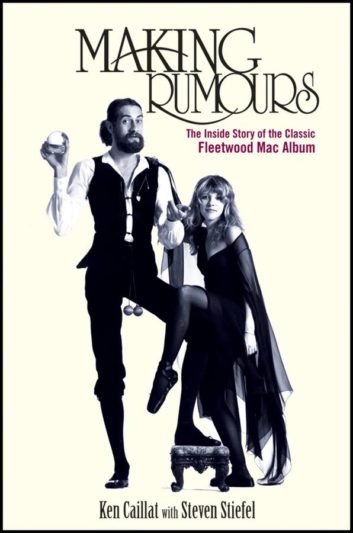
The similarities between Stereophonic and the Fleetwood Mac story have been widely noted, though playwright David Adjmi has maintained that he drew on an array of influences. But Caillat’s new suit, obtained by Rolling Stone, rebuffs that assertion, claiming the play “copies the heart and soul of Making Rumours, and is substantially similar.”
The play follows the tumultuous process of a band trying to create a hit album, with the band members composed of a drummer and two sets of couples — with one pair British and one pair American. As they create the album, the sound engineer, Grover, is depicted as one of the play’s main characters. Since opening on Broadway in April 2024, the suit estimates the play has grossed more than $20 million.
Caillat generously spills the beans, recounting the tumultuous sessions with great clarity even after 35 years, kicking things off with the unlikely tale of how he nearly turned down a quickie gig of mixing a radio concert by the semi-known Fleetwood Mac.
Taking the job on a whim, he greatly impressed the band, which was about to record its next album. While you might expect that to lead into him being asked to engineer the record, like the rest of the stories in Making Rumours, this isn’t a fairy tale.
Instead, the group hit the studio with another engineer, whose console automation crashed on the first day. Nervous and finicky, the band abruptly turned to Caillat as a distinctly second choice, but sensing a golden opportunity, he took the offer anyway.
After months of recording, it was Caillat who realized that the master tapes were shedding oxide after hundreds of takes—and more importantly, he figured out a Rube Goldberg-like way to replace their forever lost high-end.