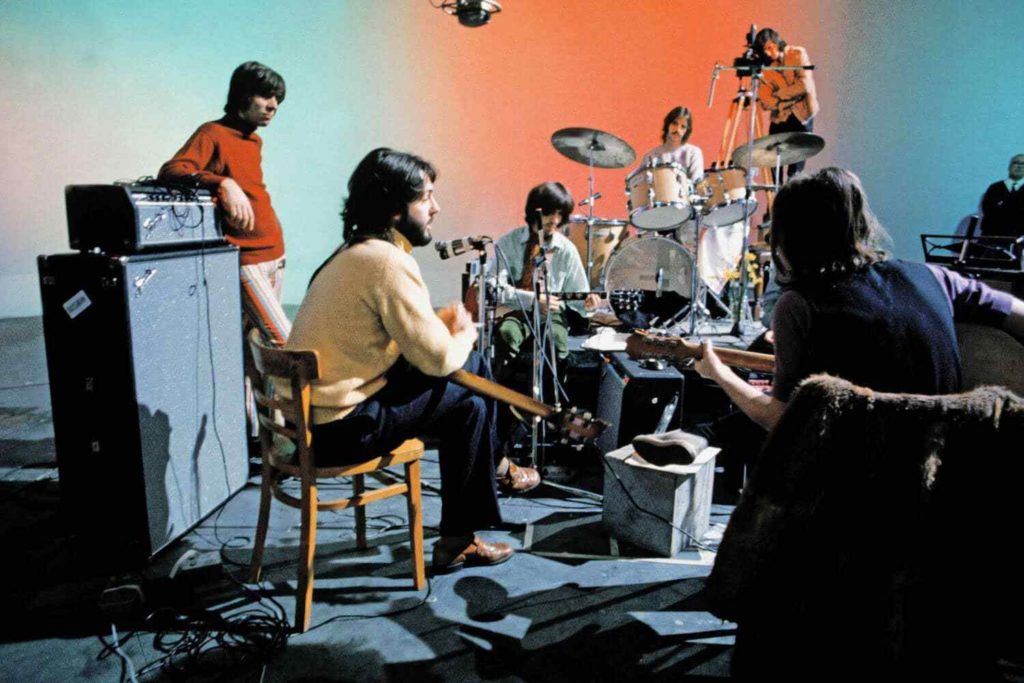
Peter Jackson told some details about the fixing process of the 16mm film. In detail, he explained that, thanks to new technologies, he was able to listen to the secret conversations, and creating a whole new story.
The Beatles' Get Back gear: a guide to the guitars and amps seen in Peter Jackson’s long-awaited documentary (excerpt from Guitarworld)- For musicians who could care less about the drama, the film provides a much closer look at the creative process and the gear that the Beatles were using as they entered the band’s final chapter. The Rickenbacker and Gretsch guitars that defined the band’s “Beatlemania” sound were gone (although McCartney’s Hofner 500/1 bass reappeared) as were the once ubiquitous Vox amps, replaced a mostly new lineup of instruments that went on to become iconic in their own right. See the gears below
The real challenge of Get Back was to restore the audio tracks. The sounds were in fact recorded by the crew, often leaving the microphones open and walking away. As they were just rehearsals, they weren't even recorded on a multi-track. They were all in mono, with no mixing. The microphones recorded everything that happened in the surroundings. If they then talked, playing, while the troupe worked in the background, what came out was just confused noise. "
We wanted it to sound better. So we came up with a technology that we called a “demixer”. It is an idea that has been around for some time, but has never been successful. In the Park Road studio we have some particularly smart people, and we had then create software entirely based on artificial intelligence. You can teach the computer how a guitar plays, what the human voice is, what noise the drums and bass sound.
So we extract a track from the mono recording and we can take, for example, only the vocal performance. So you see Ringo playing drums in the background, you see them playing guitars, but you don't hear them. There is not even a background of noise. You can only hear the voice clearly. So we differentiated between John and Paul in such a way that we could switch from one to the other as if they were both miked. First with only John's microphone on, then Paul. Finally we balanced them in harmony. "
1968 The Story Behind George Harrison’s Rosewood Telecaster-
George Harrison played this Fender Rosewood Telecaster for only about a year,In addition to its usage at that performance, this Telecaster also played a prominent role during the Get Back sessions in January 1969 and the Abbey Road sessions that took place from February through August 1969. Harrison played this Tele on several latter-day Beatles favorites, including Get Back, Don’t Let Me Down, I’ve Got a Feeling and Let It Be (single version).
The Rosewood Telecaster was part of a promotional “care package” that Fender provided to the Beatles, which also included a Bass VI, Jazz Bass, Bassman and Twin Reverb amps, Rhodes electric pianos
1965 Epiphone E230TD Casino
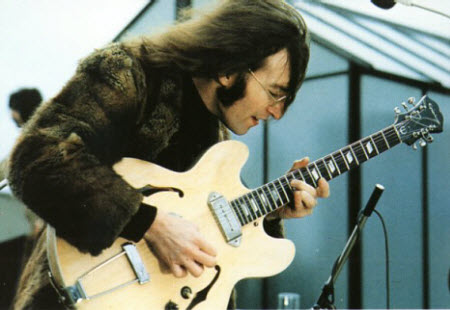
Unlike his bandmate Harrison, who adopted an ever-evolving arsenal of electric guitars during the Beatles’ latter days, John Lennon remained mostly faithful to his 1965 Epiphone E230TD Casino thinline hollowbody ever since he first acquired it in early 1966. He did make a few modifications to the instrument, however, including replacing the Kluson tuners with Grovers and removing the pickguard.
Martin D-28 dreadnoughts These Martins are the same guitars that Lennon and McCartney took to India in February 1968.
Hofner 500/1 basses
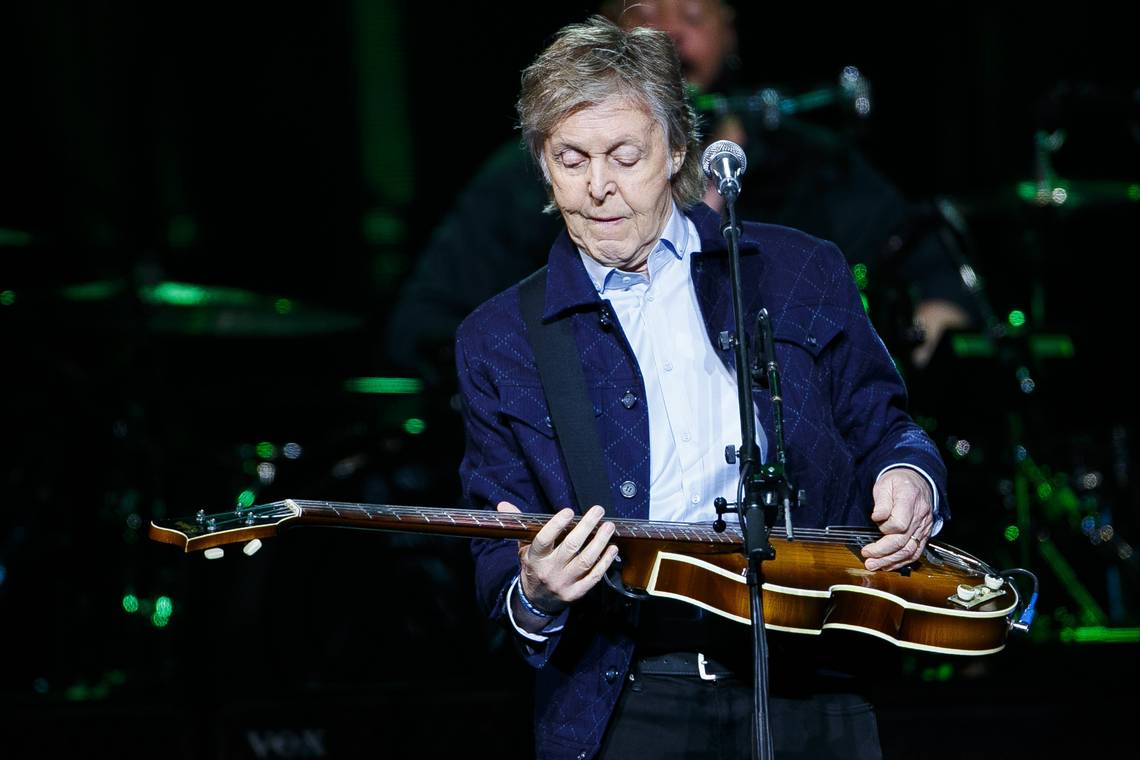
Paul McCartney’s bass of choice from 1966 onwards was a left-handed Rickenbacker 4001S model, but because McCartney envisioned Get Back as a return to the band’s rock and roll roots he decided to dust off his trusty Hofner 550/1 basses and play them once again.
1968 Fender Bass VI
Harrison and Lennon both previously played the Fender Bass VI during the White Album sessions.
Hofner 5140 Hawaiian Standard One guitar from the Get Back sessions that often gets overlooked is the Hofner 5140 Hawaiian Standard lap steel that John Lennon plays on For You Blue. The 5140 was a decent student model produced in the mid-'60s