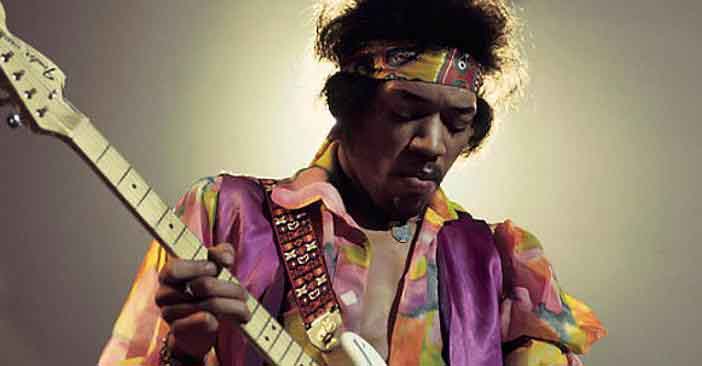
In a new interview with Rick Beato, The Police guitarist also discussed his abandoned duet with Robert Fripp, and what he learned from a guitar lesson from “the world’s greatest guitar player” Lenny Breau.
"I walked into the studio and there was Jimi wailing away. He had the hat on with the feather and he was just going for it; classic Hendrix.
“He was a very shy guy, actually. He was an introvert; it was all in the guitar playing. So he gave us a wave, put the guitar down and we talked a little bit. Then Jimi starts talking with Eddie Kramer, the engineer, so I go into the other room where Mitch was.
"There was Les Paul and it was right-handed, so I don't know why it was there,” he expands. “And it was probably outrageous that I even dared to do it, but I picked it up and I started jamming with Mitch. It's all going great, then Jimi comes up, picks up the bass and starts playing with us.
“We played for about 10 minutes and then Jimi turned round and said, 'Hey man, mind if I play the guitar for a while?' So I picked up the bass and we played for about half an hour. That was a good moment; that was probably the last time I saw him."
A new preview for the forthcoming Jimi Hendrix documentary Music, Money, Madness … Jimi Hendrix in Maui has been released, featuring a performance of ‘Foxey Lady’.
The film chronicles the band Jimi Hendrix Experience's historic visit to Maui and how they became trapped in recordings of the ill-fated Rainbow Bridge produced by their controversial manager Michael Jeffery. The Blu-ray includes the full documentary and bonuses with all 16mm color cinematic footage of the two performances that afternoon, mixed in both stereo and 5.1 surround. Also included in the box is the Live In Maui audio version, both sets distributed on 2 CDs or 3 LPs, recently restored and mixed by Jimi Hendrix's historic engineer Eddie Kramer and mastered by Bernie Grundman.
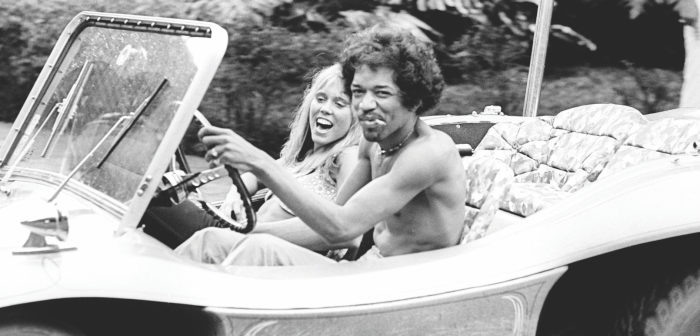
The single "Voodoo Child (Slight Return)" of this historic concert is available today on the streaming services: those who pre-order the box will receive a digital download of the song (https://jimihendrix.lnk.to/maui).
In the mid-1970s, Jimi Hendrix was working in the follow-up to Electric Ladyland with his bandmates, Mitch Mitchell (drums) and Billy Cox (bass), while being invited to headline US festivals and arenas and took part in the construction of the Electric Lady Studios in Manhattan's Greenwich Village. Completing this state-of-the-art recording facility was proving to be a costly undertaking, so its manager Michael Jeffery secured a $ 500,000 advance from Warner Bros. to finance the remaining construction. In those same meetings, Jeffery convinced Warner Bros. executives to fund a film called Rainbow Bridge that was to be shot in Maui in exchange for the rights to the soundtrack that would be composed of new Jimi Hendrix studio recordings.