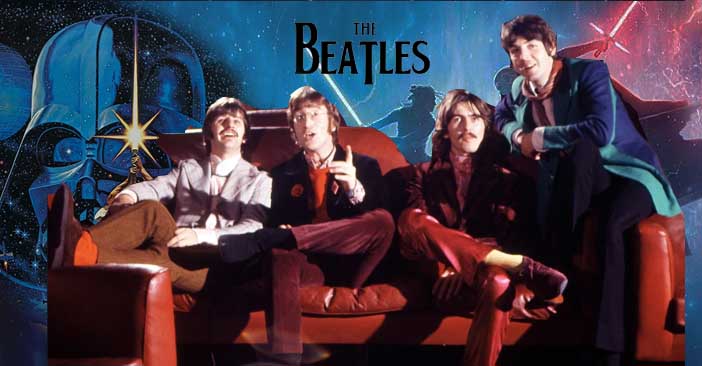

The ghost filmography of the Beatles, was inaugurated as early as 1963 with the very first film proposed to the Fab Four: Yellow Teddybears. A much duller yellow than that of the future submarine and a chilling plot, which would have seen the Beatles grapple with a group of female students in uniforms decorated with yellow teddy bears to signal the loss of virginity. Nothing happened, fortunately.
United Artist required a third contracted film, At the end of 1965 there was even talk of a western, A Talent for Loving. The film was shot three years later without them.
Walter Shenson, the Hollywood agent who negotiated the film rights for the four, mentioned other luckily trashed ideas in the summer of 1966: "We turned down everything from The Beatles in the Army to The Beatles Meet Elvis Presley." Same fate for the Beatles thieves on horseback (Ringo dixit).
Real duels occurred when Disney entered the field proposing an animated film of the Jungle Book, for which the band would have to write the original soundtrack and appear in a short final cameo, just like in Yellow Submarine. Colliding, needless to say, Paul and John.
The former was enthusiastic, the latter diplomatically opposed: «The Beatles will never sing for Mickey fucking Mouse! Tell Walt Disney to go fuck himself!" The cartoon tycoon will die within a few weeks, and four vultures with a British accent and a nice helmet will appear in the film.
Brian Epstein commissioned Joe Orton, known for his macabre comedies, an even more daring screenplay made of sex, polygamy and cross-dressing, in which Mick Jagger and Ian McKellen would also be involved. A meeting with the author and the entire Beatles was scheduled for August 9th. The driver who arrived at the Orton home found the body of the playwright killed by his partner Kenneth Halliwell, who committed suicide in the same room. Epstein died eighteen days later. McCartney would later return to the subject: «We didn't do it because it was a gay film. Not that we were homophobic, just that unlike Brian we weren't gay."
The Beatles once wanted to make 'The Lord of the Rings' filmGollum, a creepy fixture in "The Lord of the Rings" trilogy, was played by Andy Serkis. But John Lennon would have played the creature in The Beatles' version.
Paul McCartney as Frodo? John Lennon as Gollum? George Harrison as Gandalf? Ringo Starr as Samwise Gamgee? Middle Earth and Beatlemania? Article Distributed by Tribune Content Agency
No, this isn’t some LSD-fueled fantasy that mashes up The Beatles and “The Lord of the Rings.” At least, it isn’t according to Peter Jackson, who directed the three top-grossing “The Lord of the Rings” film adaptations and discussed The Beatles’ connection.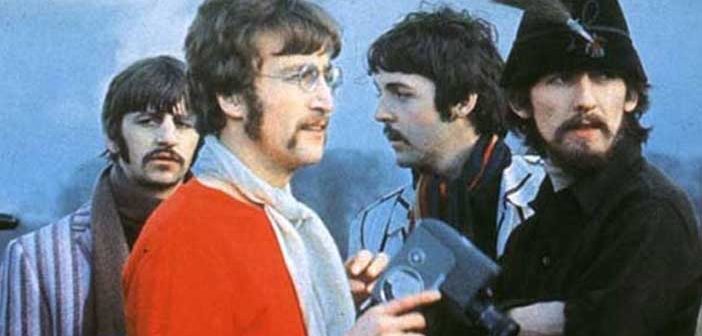
This unlikely, but true, story took on new currency, after noted documentary filmmaker and author Louis Theroux wondered aloud on his Twitter page if such a collaboration had ever been a possibility.
Actor John McGinley then responded in a tweet that, indeed, it was true. And, he noted, The Beatles had wanted Stanley Kubrick — the celebrated director of “Lolita” and “Dr Strangelove” — to helm the Fab Four’s proposed film adaptation of “The Lord of the Rings.”
Had all gone according to plan, it would have been The Beatles’ third feature film, following the Richard Lester-directed “A Hard Day’s Night” and “Help!”
According to Jackson, the world’s most famous rock band went so far as to approach Kubrick in 1967. But he turned them down to focus on what became “2001: A Space Odyssey,” a film that is still regarded as one of his greatest achievements.
Yet, even if Kubrick had agreed, The Beatles’ quest to turn “The Lord of the Rings” into a movie starring The Beatles would apparently have been a non-starter. That’s because “Rings” author J.R.R. Tolkien was, most decidedly, not a fan of the band.
“It was something John (Lennon) was driving and J.R.R. Tolkien still had the film rights at that stage, but he didn’t like the idea of The Beatles doing it. So he killed it,” Jackson told the Wellington Evening Post in 2002, after learning of the proposed project from McCartney. “There probably would’ve been some good songs coming off the album.”
The Beatles-Rolling Stones dualism added a new chapter to its legend, when Godard turned to Jagger and his companions, who agreed to appear in the film then renamed Sympathy for the Devil.
From the pages of the International Times, the French filmmaker accused the Beatles of political disengagement. Lennon replied almost in foil to Rolling Stone: "Dear Mr. Godard, just because we didn't want to participate in your film, it doesn't mean that we aren't doing more than you are doing". In the end it didn't go much better with the Stones, unprepared for such a revolutionary montage. "A load of bullshit" was Keith Richards' review.
Distributed by Tribune Content Agency