This is an excerpt from Sound Pictures: The Life of Beatles Producer George Martin (The Later Years: 1966-2016) by Kenneth Womack, (source by the indipendent).
The second volume of the first full-length biography of George Martin, Sound Pictures: The Life of Beatles Producer George Martin, The Later Years 1966-2016, is coming on Sept. 4 .
The late Years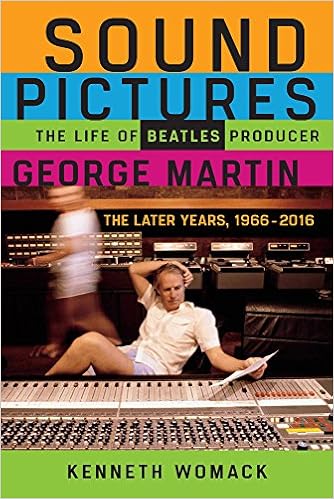
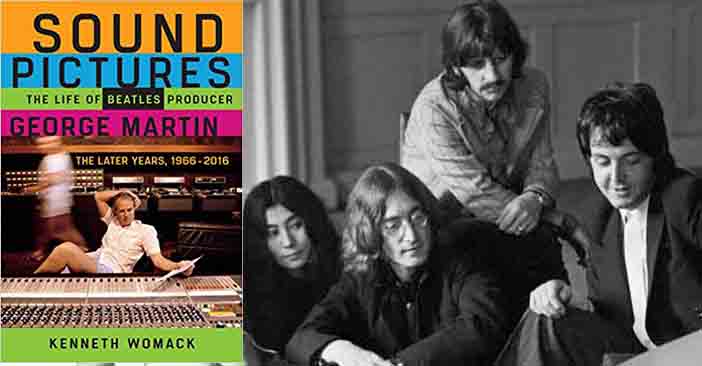
On Thursday 30 May 1968, George Martin and The Beatles finally reconvened in Studio 2 to work on their next LP.
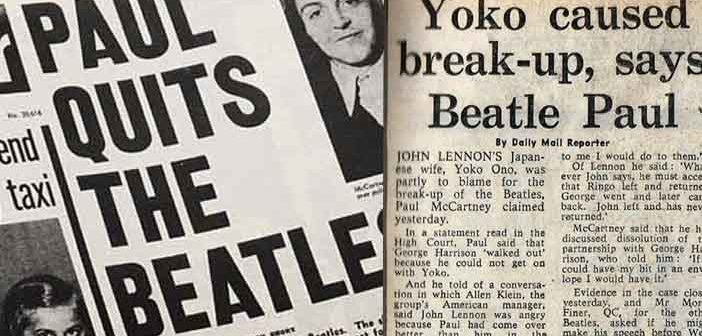
And while the bandmates were armed to the teeth with new compositions, pre-tested and demoed at Kinfauns only a few days earlier, they weren’t alone. They were joined by Yoko Ono.
Ono had insinuated herself into the lives of George Martin and The Beatles as well. The professional sanctum of the studio, which had long been the bandmates’ sanctuary from the ever-encroaching outside world, had suddenly been upended by Ono's presence.
To read the full article click here
It was Geoff Emerick who felt the winds of change first. When Lennon arrived at the studio that day, he deposited Ono in the control booth before shuttling into the studio. As Emerick later wrote, “For the next couple of hours Ono just sat quietly with us in the control room.
It had to have been even more uncomfortable for her than it was for any of us. She had been put in an embarrassing situation, plunked right by the window so that George Martin and I had to crane our heads around her to see the others out in the studio and communicate with them.
As a result, she kept thinking we were staring at her. She’d give us a polite, shy smile whenever she’d see us looking in her direction, but she never actually said anything.”
As the session got underway on 30 May, Lennon debuted a new song that would come to be known as “Revolution 1”, a standout composition from the Esher demos.
Emerick can be heard announcing “take 18” when the song rolls into being, with the bandmates eventually concluding “Revolution 1” with an extensive jam before Lennon shouts, “Okay, I’ve had enough!”
As for Ono, once she had cleared a path to her boyfriend working down in the studio, she would almost never leave his side.
As the session got underway, Emerick could tell that The Beatles were playing louder than ever before, with Lennon's amp turned up to “an ear-splitting level”.
After politely suggesting that Lennon lower the volume so that he could adequately capture the recording, Emerick off was stunned by The Beatles' response over the talkback: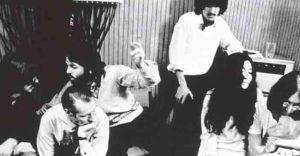
“I’ve got something to say to you,” Lennon caustically replied. “It’s your job to control it, so just do your bloody job.” At that point, Martin and Emerick exchanged knowing glances. And that’s when The Beatles’ producer told Emerick, “I think you’d better go talk to him”.
Moments later, Emerick had joined Lennon down in the studio. “Look,” Lennon calmly explained, “the reason I’ve got my amp turned up so high is that I’m trying to distort the shit out of it. If you need me to turn it down, I will, but you have to do something to get my guitar to sound a lot more nasty.
That’s what I’m after for this song.” As Emerick began to make his way back to the booth, already imagining a solution to Lennon's dilemma, he was thunderstruck when the Beatle sneered, “Come on, get with it, Emerick. I think it’s about bloody time you got your act together.”
When Emerick returned to the booth, he was met by Martin, who asked, impassively, “What’s he on about?”
For his part, Martin had also registered the difference in The Beatles’ atmosphere, and he strategically fell back on the calculated approach that had served him well in previous years. He self-consciously enacted a “tactical withdrawal”.