Three of Anderson's solo albums have never before appeared on vinyl: 1995's Divinities: Twelve Dances with God, 2000's The Secret Language of Birds and 2003's Rupi's Dance. The track listing for a disc titled Roaming in the Gloaming featuring unreleased live recordings from 1995-2007 is also below. 8314 Boxed is rounded out by a 96-page book with a foreword from Anderson and exclusive new liner notes and photographs.
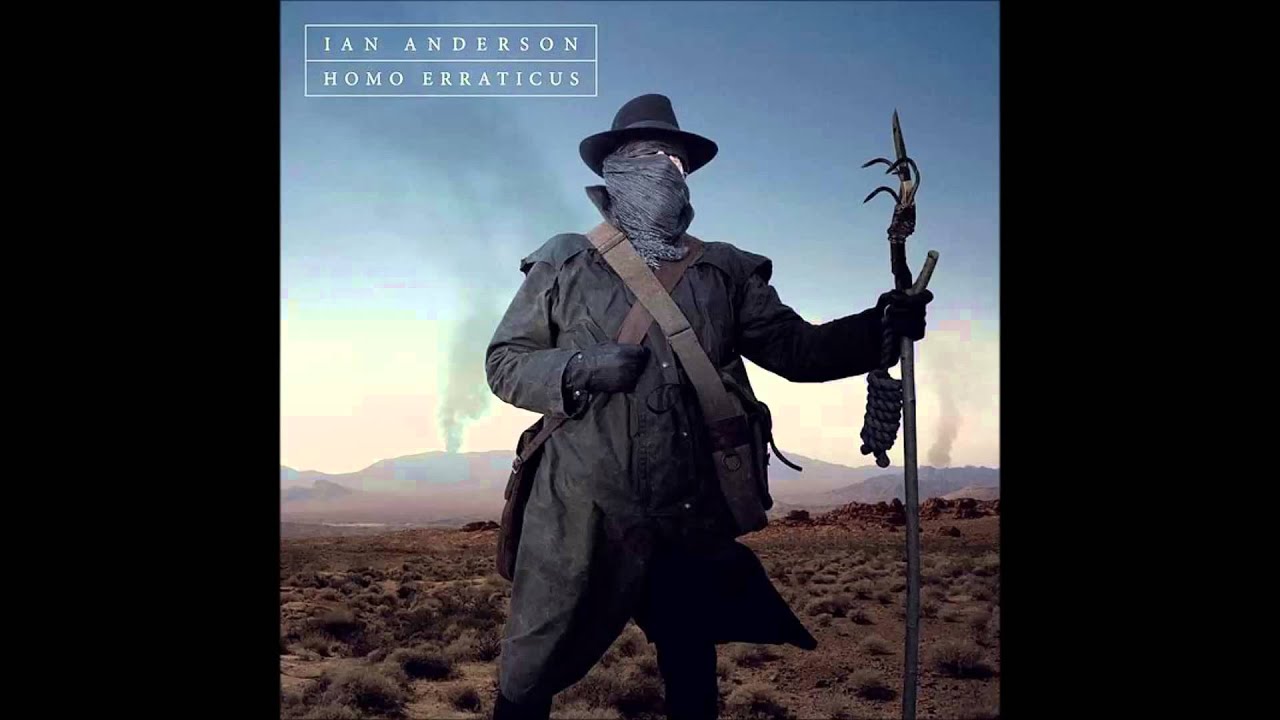
Among the highlights are two sequels to Jethro Tull's prog cornerstone Thick as a Brick. 8314 Boxed will include a 2LP reissue of 2012's Thick as a Brick 2 with a special etching on Side D and a half-speed vinyl remaster of 2014's Homo Erraticus, which again followed the fictional character Gerald Bostock.
Four decades on from the thrilling Thick As A Brick came the justly-acclaimed sequel, subtitled Whatever Happened To Gerald Bostock? “I wonder what the eight-year-old Gerald would be doing today,” Anderson pondered. “Would the fabled newspaper still exist?”
"Since 1983, I have made a few solo albums, not as dissatisfaction with fellow musicians or the group identity but usually just to try something a bit different – whether sonically, stylistically or in terms of instrumental line-up," Anderson said in an official statement.
"These records all stand out for me as being quite different from each other and in some ways demonstrate a broader depth of my songwriting," he added. "The flute instrumental Divinities record is one of my favorites to this day."
The Secret Language of Birds became a Top 30 U.S. hit in 2000, while fans who remained interested in Bostock's fate pushed Thick as a Brick 2 to the Top 40 in the U.K. Homo Erraticus fared even better, hitting No. 14 on the U.K. chart in 2014. Anderson released Thick as a Brick: Live in Iceland later in the same year.
In 2013, three decades after Jethro Tull mastermind Ian Anderson released his first solo album, Walk Into Light, he was assembling what would become his sixth outing, Homo Erraticus. That year he offered Prog a rundown of how he’d created the material released beyond the confines of the great band.
Walk Into Light (1983)
Anderson worked closely with then-Tull keyboard player Peter-John Vettese on his first solo release – though Tull’s A had been originally mooted as such in 1980, Chrysalis urged the use of the band name to boost sales.
“I suppose the first thing here was to embrace the changing world of technology in the early 80s,” he muses. “Sequencers and samplers and computers became a real prospect in music as a songwriting and performing tool. So, rather than just ignore it, I thought I’d better try to get to grips with it, because it probably will be the face of change. And, of course, it was – just as Fender and Gibson guitars and the Hammond organ changed the face of music in the 50s and 60s.
There’s a new album on the way; something I’ve already written,” Anderson reveals. “I gave myself three weeks to come up with it – obviously not to complete it, but to substantially write the lyrics, the tunes and the general shape of a whole new album. It was a good thing to do.
“Then I made simple demos of all the material and sent them out to the guys in the band… and we have all promptly put them under the pillow and forgotten them! But we’ll re-examine them and prepare for the serious recording.”