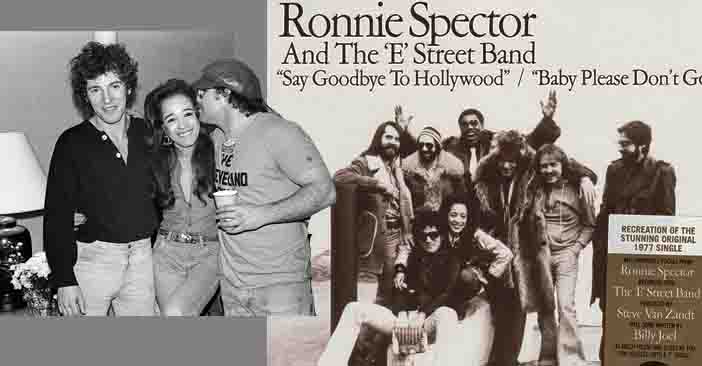
In 1977, Bruce Springsteen was caught up in a nasty lawsuit with his ex-manager, Mike Appel, and was running out of money to pay the members of the E Street Band.
Springsteen was legally barred from the recording studio, and the band members were losing patience. As guitarist Steve Van Zandt recalls in his book Unrequited Infatuations, at least three members — who had other options as session musicians — actually voted to break up. But after Van Zandt convinced his bandmates to hold off, his friend, record exec Steve Popovich, came up with a perfect solution, which involved a temporary new frontwoman for the E Street Band: Ronnie Spector.
Ronnie was encouraged by many of the musical icons she’d influenced and inspired to return to singing. “So that’s what I did,” she told Vice in 2016. “I went right back, because I had people like Keith Richards and John Lennon and Billy Joel and David Bowie – even Springsteen –telling me ‘Ronnie, you have the voice of all voices.
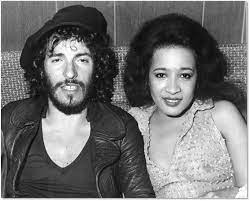
Spector, who was just easing out of semi-retirement — she had worked with Van Zandt the previous year on Southside Johnny’s debut, I Don’t Wanna Go Home, which he produced — was a musical hero for Van Zandt and Springsteen alike. (Just check out the whoa-whoa-whoas on “Born to Run,” which are straight out of the Ronettes’ “Be My Baby.) “We all fell in love with that voice,” says Van Zandt. “That combination of innocence and a little bit of sensuality and sexuality.” (Ronnie Spector died January 12th at the age of 78.)
Popovich came up with the idea of releasing a Ronnie Spector and the E Street Band single covering Billy Joel’s “Say Goodbye to Hollywood,” which Joel had written as a tribute to Spector’s style, and earning the band members a decent paycheck in the process. Spector agreed, and they all went into CBS Studios, with Springsteen along as an advisor.
“At a certain point, we realized that she had changed the vibrato of her voice,” Van Zandt recalls. “She changed her style a bit in the off years and so we just kind of reminded her, there’s this thing you do, this really cool sexy vibrato thing. And then we got the take.”
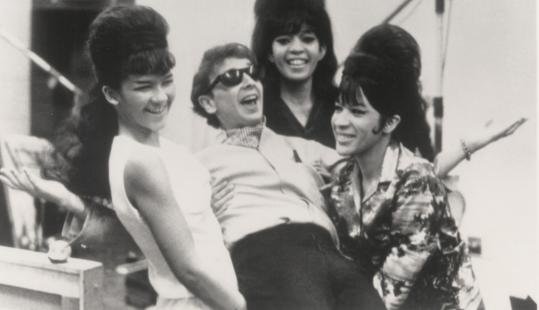
Née Veronica Bennett, she forged an enduring “bad girl” image with her older sister Estelle
Meanwhile, Spector and Van Zandt had a brief romantic relationship, in which he learned the extent of her struggles with alcoholism. She sobered up and went on tour with Southside Johnny, who had also stopped drinking — and Spector continued touring for the rest of her career. “We had her back on stage, and she stayed there for the next 45 years,” says Van Zandt. “Professionally, what an honor to produce her. And it was a very, very critical moment.