All You Need is Love is a strange title for a book about the petty resentments and soul-sapping feuds behind the collapse of what Ringo Starr describes here as “the best band that ever was”. But it isn’t solely about The Beatles’ end.
Instead, it’s an oral history, repurposed from interviews conducted by Peter Brown, an aide to Beatles manager Brian Epstein, then an executive at the group’s company Apple, and US writer Steven Gaines.
Most of the interviews − with the group (minus John Lennon), their wives and their associates − were carried out just months before Lennon’s murder in December 1980, and used extensively in the 1983 biography The Love You Make, also by Brown and Gaines, which was deemed so salacious that Beatles fans branded it “The Muck You Rake”.
Linda McCartney threw her copy on the fire and filmed it burning.
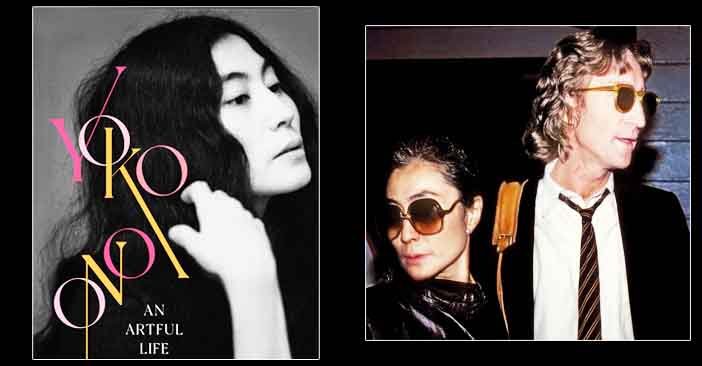
"John Lennon used Yoko Ono to break up The Beatles." Former assistant tells all.
John wanted The Beatles over with – so he used Yoko to do it’:
Dan Richter lived with and worked for the couple. He talks about his ringside seat at the bitter end of Lennon, McCartney, the Telegraph report
Brown had been part of The Beatles’ inner circle. He’s even name-checked in the band’s 1969 hit, The Ballad of John and Yoko: “Peter Brown called to say / You can make it OK.” He could, then, have written an interesting memoir. Instead, Gaines fleshed Brown’s memories into a full biography, dishing the dirt not just on scenes that he witnessed − Beatlemania, Epstein’s decline, the chaos of Apple − but on events that he couldn’t have, such as the group’s childhoods.
The more dubious claims of Brown and Gaines in 1983 − that Lennon and Epstein had a sexual relationship in 1963, or that Starr’s drumming was replaced in the studio by Paul McCartney − are not, it turns out, supported by these interviews. And yet, like the earlier book, this one is riddled with inaccuracies.
No one here is a reliable witness. They frequently contradict each other. McCartney, speaking just 10 years after the 1960s, says that his recollections are “hazy”. The Beatles’ music, meanwhile, is barely mentioned.
Nonetheless, for all its flaws, All You Need is Love is a fascinating snapshot of the tensions still festering between the Fab Four in 1980. George Harrison describes Lennon as “a piece of shit… he’s so negative about everything… He’s become so nasty”.
McCartney, who these days suggests that he and his estranged songwriting partner were reconciled before the latter’s murder, says here of Lennon and Yoko Ono: “If I lie down and do everything they say… then we can be friends. But if I have an opinion that differs from theirs, then I’m… an enemy.”
One early crisis point was the band’s decision to pull the plug on Beatlemania by ceasing to tour. Road manager Neil Aspinall says the group didn’t know in 1966 that the concert at Candlestick Park, San Francisco, would be their last: “Nothing they ever did was pre-planned.”
That added to the anxieties of Epstein, who died of a drug overdose in 1967. Brown was the last to speak to him. Queenie Epstein, Brian’s mother, says she will “never know” if her beloved son took his own life.
Disharmony among the group was stoked by Ono and Linda Eastman (as she would be until 1969). They polarised The Beatles, according to Harrison’s then-wife, Pattie Boyd, because they were “strong women”.
Art dealer Robert Fraser recalls that “the animosity… [between John and Paul] was entirely created by Yoko”, whom he describes as a “very dominating, relatively unattractive… utterly charmless person” who “was always telling John that he should be on his own”. Ono, for her part, revels in her role as disruptor, claiming that she attended a Beatles business meeting, which was made up of Jewish businessmen, dressed as an Arab. “They hated me anyway,” she says. “But yeah, that made it worse. Funny.”
The rivalries intensified in the 1970s. Maureen Starkey, Starr’s first wife, describes her horror at Harrison declaring that he loved her. “Pattie was there, too,” she says.