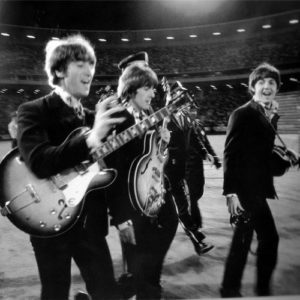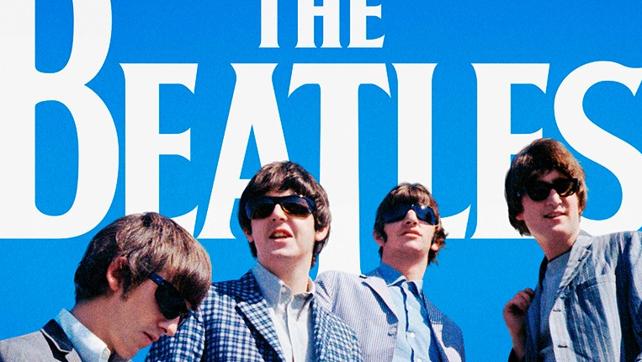
On New Year's Eve 1961, the Beatles drove in a snowstorm from Liverpool to London. The next day, they set up shop in Decca Studios and cranked out 15 tracks in a few hours. The songs reflected what they were regularly performing at the time, a mixture of rock, R&B, rocked-up standards and originals.(Souce: Ultimateclassicrock - devastatingdisaster)
They hoped for a recording contract. Instead, they were advised by Decca’s A&R bigwigs that ‘guitar groups were on the way out’ and were rejected in favor of a local band whose travel expenses would be lower. Just 18 months later, the decision was already being cited as one of the biggest mistakes in musical history – and by any financial yardstick it’s been getting bigger ever since.
Dick Rowe, the A&R man who agreed to try out the group, was unimpressed, however, famously telling manager Brian Epstein that "guitar groups are on their way out." Five months later, the Beatles signed with George Martin at Parlophone, an imprint of EMI, leading to arguably the most successful artist-producer collaboration in history.
Five of the songs – "Searchin,'" "Three Cool Cats," "The Sheik of Araby," "Like Dreamers Do" and "Hello Little Girl," the last two of which were written by John Lennon and Paul McCartney – appeared on the Beatles' Anthology 1 in 1995. Two others, "Money (That's What I Want)" and the showtune "'Till There Was You," were rerecorded for their second album, With the Beatles.
The remaining eight songs included Chuck Berry's "Memphis," Buddy Holly's "Crying, Waiting, Hoping," Bobby Vee's "Take Good Care of My Baby," Phil Spector's "To Know Her Is to Love Her" and another original, "Love of the Loved."
And yet… even if you’re besotted by The Beatles, the Decca audition tape isn’t very good. Only hindsight enables you to identify what would develop into signature musical features. Beatles’ manager Brian Epstein’s selection of songs reveals his own, muddled, musical taste; and though they are played with the fluency acquired doing three, finger-splintering sets a night in Hamburg’s Reeperbahn, the songs cover too broad a stylistic range to establish a strong identity. Even so, Decca’s lack of enthusiasm was typical of Londoners’ attitudes to ‘north of Watford’. If they’d been listening, they’d have picked up the new buzz from the Liverpool area.
From Epstein’s and The Beatles’ point of view, the Decca rejection turned out to be a blessing. It meant the unwanted tape could be played to an EMI subsidiary producer, who spotted the originality of the feisty personalities behind it. And the whole world knows about the symbiotic relationship of The Beatles and their producer George Martin.