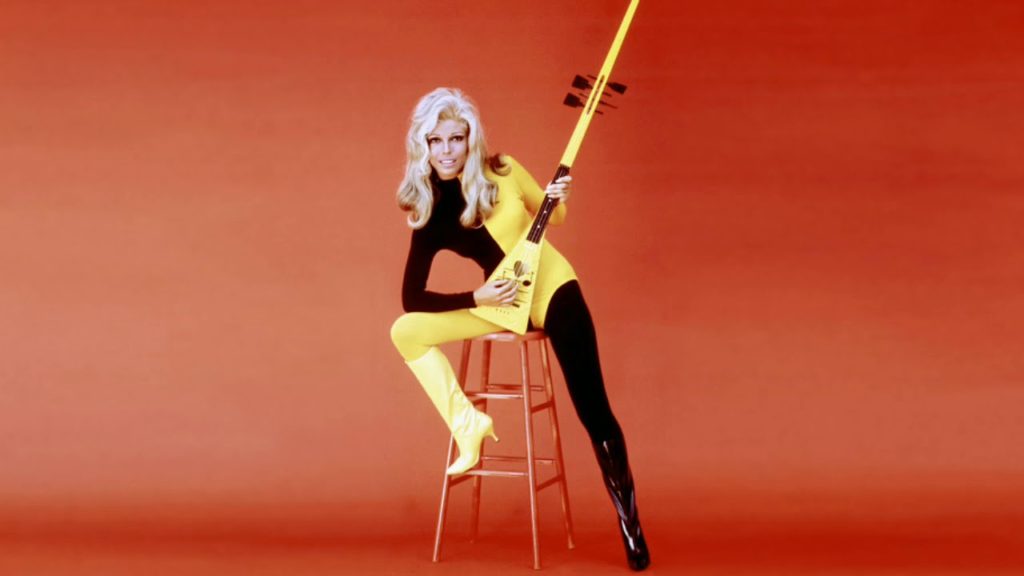
Nancy Sinatra had no intention of re-singing her old hits. After dominating the 1960s pop scene with classics like These Boots Are Made for Walkin 'and Bang Bang, he left the record industry to devote himself to his children and social activism.
She stopped touring in the early 2000s, but sometimes returned to the recording studio. "I didn't have an agent, there was no one who promoted me," he says. "And you need it if you are an artist who has been famous in the past. You need someone to represent you, to organize things. I didn't have that figure. And so, over the years, my popularity has been running out. "
Now that she is 80, however, Nancy Sinatra has someone to take care of her: her daughter Amanda Erlinger, who proposed to her mother to set up an anthology of the pieces published since the mid-60s, when it came out. from the shadow of his father Frank with These Boots Are Made for Walkin '.
It was one of many brilliant songs written with Lee Hazlewood - including Some Velvet Morning and You Only Live Twice - that influenced everyone from Sonic Youth to Lana Del Rey.
"The first pieces sold enough to keep me on the label. Then they no longer sold, I risked being downloaded, and they told me: "Do you know what it is? You will work with Lee Hazlewood "."
He changed everything. He pretended to be a sucker, an ignoramus, but in reality he had studied a lot. He was an army veteran. A person of the world who knew what he was doing. On my records he brought out what he called the dumb sound. Dumb stood for simple, not complicated. It consisted of the rhythm section, bass and drums, and three guitars. And everything has changed for me.
He wrote These Boots Are Made for Walkin '. Is it true that he was supposed to sing it at first?
It's true. And I told him the truth: making a man sing it wasn't much, it sounded bad, that was a song to give to a girl. He understood that I was right.
Your style, with the mini skirt and sweater, has become incredibly influential. How was it born?
On a trip to London. I went to Carnaby Street, at the time that was where people went shopping, and there was a shop called Mary Quant. That's where I saw the first miniskirts. It had never happened to me. There was no such thing in the United States. And I knew they would go out of style. I didn't have clothes like that, I only wore long sweaters. In Boots video is my first attempt. Also on the cover of How Does That Grab You? I had a long sweater. It has become quite iconic. I think it was because they were different, they dared, and they came close to what would become the miniskirt.
What is the best advice you received at the beginning of your career?
Well, my dad was a good one, you know? He advised me to have my masters. He founded Reprise, his own label, because he couldn't do it with the Capitol. And he made sure that all of the Reprise artists retain ownership of the masters after a certain period of time. I heard Taylor Swift's were sold out once more. It's a shame. Here is what I would say to young people: do not despair, cultivate your dreams and do not let anyone take them away from you.