The Beatles refused to play for a segregated audience in 1965 at the Cow Palace in San Francisco, a recently released contract and concert rider reveals.
As the Guardian reports, the documents, signed by the band's manager Brian Epstein, detail several routine demands for the then arena pop stars such as a trailer with "electricity and water" and dressing rooms with "four cots, mirrors, an ice cooler, portable TV set and clean towels."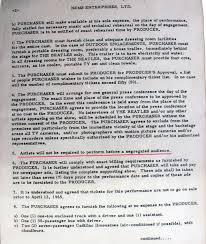
But the standout demand is that the band would "not be required to perform in front of a segregated audience," a surprising stipulation given the state of racial tensions at the time.
The contract also details the band's need for security. The Beatles requested "no less than 150 uniformed officers for protection" as well as a "special drumming platform for Ringo [Starr]."
The contract will be auctioned off at Nate D Sanders in Los Angeles, Calif. on September 20 and is expected to fetch up toward $5,000.
John Lennon was so furious when he discovered that the Gator Bowl stadium in Jacksonville, Florida would be racially segregated that he issued a press statement saying the group would not appear unless black fans were allowed to sit where they liked.
“I always thought the Beatles story had been told very often, but never very well, and I wanted to tell it in this way, where you’ve got lives running on parallel tracks that occasionally crossover, then eventually do get together, biographer says.
In many ways, Tune In is a book filled with revelations — plenty of them in the original format’s 944 pages, even more so in the extended edition’s 1,728 — and Mark, who has written a number of comprehensive books on the subject already, had his eyes opened as well (which says a lot). What follows is his guide to some of those revelations, which differ in some cases from established Beatles history.
This extended special edition of Mark Lewisohn’s magisterial book Tune In is a true collector’s item, featuring hundreds of thousands of words of extra material, as well as many extra photographs. It is the complete, uncut and definitive biography of the Beatles’ early years, from their family backgrounds through to the moment they’re on the cusp of their immense breakthrough at the end of 1962.
THE JAPGE 3 There are so many little anecdotes from people who were witness to events who have never spoken before,” he says, “and of course the stuff the paperwork explains — documented research is a big part of this book. I was intrigued to find that John, Paul, and George went around as a trio called Japage 3. from“I actually number the years that pass in the book,” he adds, “because it’s important to understand that when, for example, The Beatles appeared on The Ed Sullivan Show [in February 1964], you think they’ve just arrived; that they were ‘born’ on Ed Sullivan, but it’s actually year seven. That puts things into proper perspective, and explains why they were so well-developed, so confident, and so able to withstand the extraordinary pressure of global fame and that unbelievable new kind of celerity that they had. To actually maintain their sanity through all that was owed to many reasons, but partly because they had been doing this a long time.”
So the natural question to ask is how it can even be possible that people are still so passionate about The Beatles nearly half a century after they disbanded. “It’s very insane, isn’t it?” asks Mark rhetorically. “It wasn’t meant to be like this, but ultimately something of true originality will sustain. But for it to still be so engaging and fresh when you hear it… I’m not one for purple prose particularly, but you end up thinking this is all quite magical in a way. The fact that we’re so enthused and so engaged with them, and the fact that they still sound so strong is baffling. But that’s exactly what I need to be looking at.