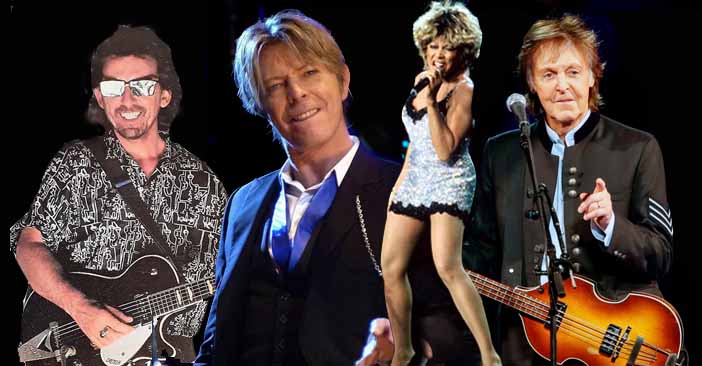
That’s not to say that every one of these albums is perfect from top to bottom. Each album has an adjustment period where the artist struggles to return to their old sound. When they pull it off and win, it’s like being transported back to the glory days, when they never dated past their prime and are ready to kick some ass again. Excerpt from FaroutMagazine.
Cloud Nine – George Harrison
By the start of the 1980s, George Harrison didn’t seem to want a music career anymore. After being one of the most successful ex-Beatles out of the gate with All Things Must Pass, albums like Somewhere in England and Gone Troppo saw Harrison take his foot off the gas, focusing more on his film company than anything substantial. The ‘80s might have been tough on ‘The Quiet One’, but things began to turn around once Jeff Lynne got involved.
Being one of the biggest Beatle fans, the Electric Light Orchestra frontman helped Harrison come out of his shell on Cloud Nine, making songs that were more accessible than what he was used to preaching about on his earlier records. The attention on spirituality might still be there on ‘This is Love’, there’s a glossier sheen behind it, almost like Harrison is trying his hand at Peter Gabriel tunes partway through the record.
The world of rock and roll without David Bowie is a much scarier place to think about. Throughout his career, ‘The Starman’ gave audiences some of the most forward-thinking music of his generation, always pushing the boundaries for what the art form was capable of.
Bowie knew that he needed something more than vaudeville to get people to pay attention, and that meant looking far beyond the stars to get it.
Space Oddity is more in line with folk-rock than glam. But the title song set Bowie on the right track to dominate the rock world in the future.
It could be argued that Tina Turner has never had a slump era in her career. From her work in the ‘60s to her turn as a solo star, Turner was always about bringing some of the most forceful soul music to listeners wherever she went.
Around the start of the ‘80s, Tina had finally been fully separated from her husband Ike, who had helped lead her backing group and trained her to be a glorified puppet for his act. Almost in retaliation for those years of being used, every song on here feels like an empowerment anthem, from the kiss-off to her husband ‘What’s Love Got To Do With It’ to making a glorified rock track on ‘Steel Claw’.
After their third album, Queen was ready to take over the world of rock. The band had their sound down to a science at this point. Their first hits were starting to make significant dents on the charts, with ‘Killer Queen’ becoming a staple in their catalogue. So when they’re making that much money, how the hell did they go broke?
After getting their latest financial statements, Queen found out they had been ripped off on their contract and went to war against their higher-ups. As a sort of payback to get out of their deal, the group pulled out all the stops for A Night at the Opera, running the gamut between every genre they knew best, from rockers on ‘I’m In Love With My Car’, earnest love songs on ‘Love of My Life’, and even delving into prog rock with the epic ‘The Prophet’s Song’.
https://open.spotify.com/album/7HVoV2lgVsmuiHsjbbUJB4
For as famous as he is nowadays, Paul McCartney was actually in trouble in the mid-’70s. After the Beatles’ breakup, Macca was cast as the villain in ‘The Fab Four’ story, and his latest sugary stabs at pop on ‘My Love’ did nothing to endear him to the rock and roll crowd. Once his entire group abandoned him before recording in Nigeria, McCartney pulled out the big guns for Band on the Run.
Recorded under horrible circumstances (including being robbed at knifepoint), Band on the Run is the McCartney that fans had been missing for all those years, getting in touch with his rock and roll side