.
We are talking about a very young Janis Joplin who, pursuing her passion for music, in those years left her Texas to move to San Francisco in the hope of being able to do what she liked best and what she did best: singing. and play, in fact. But Janis had begun to be talked about even before leaving for California, especially in the university field.
Listening to this recording, in fact, we discover that Janis gave a real blues lesson that evening, because before performing each song, she explained it and briefly told its story. For that concert, among other things, the artist chose some great classics among the best in the history of American music. "This is a piece that a lot of blues singers sing," he explained, for example, introducing the song Daddy, Daddy, Daddy. "The version that I perform of this song - he said later, presenting Careless Love instead - was recorded by Lonnie Johnson in the 1920s. He is a musician from the past who has never achieved great popularity, but is still very good. "
"She dares to be different - reads an article dedicated to her in the Daily Texan, a university newspaper of the time - when she likes, she walks barefoot, wears Levis to class because they are more comfortable, she brings her autoharp with her (musical instrument with plucked strings ed) wherever he goes like this, in case she feels the need to sing a song, she will always have it at hand. Her name is Janis Joplin ».
Sadly, Janis did not get a chance to enjoy this success. In fact, she did not even get to finish the album that would consolidate her legendary reputation. On October 1, 1970, Joplin took to the studio to record the a capella song “Mercedes Benz” in one take and a quick birthday serenade to John Lennon, who would soon turn 30. These proved to be the final vocal performances she ever committed to tape. Two days later, she visited the studio to hear the instrumental track for the song “Buried Alive in the Blues,” which was gifted to her by 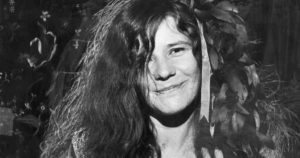
tunesmith Nick Gravenites. Satisfied with the recording, she announced to producer Paul Rothchild that she would add her vocal to tape the next day before going out drinking at Barney’s Beanery, a high-end bar and restaurant in West Hollywood. She then retired to the Landmark Motor Hotel, where she had been staying since her arrival in California.
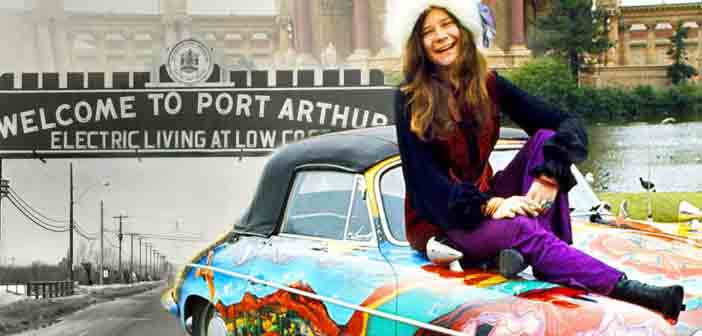
The next day, Janis was conspicuously absent at the studio, much to the concern of Paul Rothchild. John Cooke, the road manager of the Full Tilt Boogie Band, drove to the Landmark Motor Hotel to check on her. In the parking lot, he saw her pyschedelically-painted Porsche 356 rag-top convertible, and when he stepped inside room #150, he found Janis lying dead on the floor between her bed and the table beside it with a fresh needle mark in her arm. She had a cigarette that had burned down to the filter in one hand and four dollar bills in the other. As she fell forward in her death throes, she had struck her face on the bedside table, bloodying her lip. Shortly afterward, an inquest undertaken by the Los Angeles County Coroner’s Office determined that Janis Lyn Joplin, 27, had died of a heroin overdose compounded by alcohol use.
Sessions for her album were abruptly halted and “Buried Alive in the Blues” was kept as an instrumental. Although Pearl ended up being incomplete, it became her best-selling album upon its release in January 1971.