By Jonathan McAloon -Excerpt from BBC
As well as creating news headlines, criminal cases have inspired a rich tradition of songwriting, beginning with the murder ballads of previous centuries (versions of Knoxville Girl, sung by Elvis Costello and Nick Cave, among others, date back to the 1700s) and evolving into the controversial hits of today, such as when German industrial metal band Rammstein caused outrage when Mein Teil, their song about the Rotenburg cannibal murder of 2001, reached No.2 in Germany (and No.1 in Spain).
At times, musicians have written about crime to shock. Equally, they're trying to make sense of the human condition, to memorialise the dead, or to protest what they perceive as miscarriages of justice, as some of the songs discussed here do.
The case: In 1827, Suffolk woman Maria Marten was due to elope with her lover, the noted fraudster William Corder. But Corder shot her at their assignation point, a local landmark called the Red Barn, where she had come disguised in men's clothes. After he was seen without her, Corder claimed his 'wife' was probably in neighbouring Ipswich or Great Yarmouth, and eventually pretended she was alive in a series of letters to her family. Marten's body was found buried in the barn after her stepmother allegedly had dreams about it, and Corder was sentenced to death.
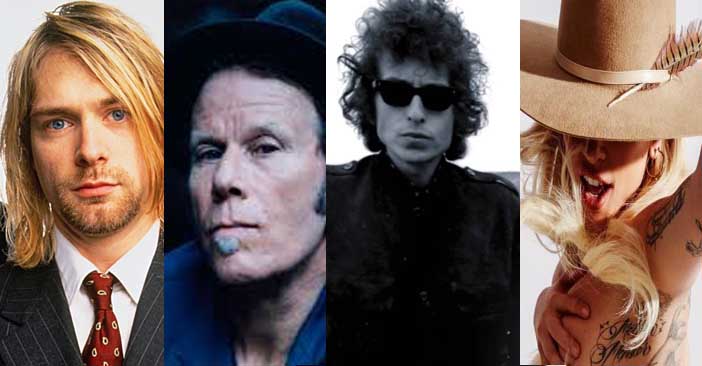
The songs it inspired: Corder's trial caused a public sensation, and in its day inspired plays, a bestselling melodrama and at least five murder ballads, which were later collected by the composer and early folk song archivist Ralph Vaughan Williams. In 1992, American songwriter Tom Waits transported the incident to the American Deep South, creating a highly impressionistic modern-day murder ballad, Murder in the Red Barn, for his Bone Machine album.
The case: The shooting of 17-year-old African-American high school junior Trayvon Martin in a Florida gated community by a volunteer neighbourhood watchman, George Zimmerman, became a global news story in 2012. According to BBC News, "Mr Zimmerman had been sitting in his vehicle watching a neighbourhood street when he saw Martin and deemed him suspicious. He telephoned authorities, then left his vehi cle to pursue Martin."
Zimmerman denied he intended to shoot Martin, claiming, as BBC News reported, "the teenager became aggressive and threatened him and that he drew his legally carried gun and shot in self-defence." In 2013, Zimmerman was found not guilty of second-degree murder and manslaughter.
The songs it inspired: As well as nationwide protesting and comment from President Barack Obama, Martin's death has inspired scores of musical tributes and many more name checks. In varying degrees, his memory is woven throughout the music of artists such as Kendrick Lamar (Blacker the Berry), Chaka Khan (Super Life) and Floridian rapper Plies, who in We Are Trayvon praises Martin's love of American football, envisaging the teenager "with a solid gold football" and tells him he will forever live on.
Lady Gaga wrote Angel Down about the shooting and included the song on 2016 album Joanne. The lyrics examine allegations of injustice, as well as what she perceived as people's moral cowardice: "Angel down angel down, but the people just stood around." Speaking to Beats 1 about what she called "the epidemic of young African-Americans being murdered in this country", she said: "How can I not say something?... How could I possibly make an album about twerking my a** in the club?"
The case: In 1966, two white men and one white woman were shot and killed in a New Jersey bar. Witnesses identified the shooters as two black men, and the similarity between the getaway car and one owned by the middleweight boxer Rubin 'Hurricane' Carter, as well as his possession of similar ammunition to that used in the shooting, led to him and his friend John Artis being accused of the murder. Though surviving victims of the attack did not identify the two as their shooters, Carter and Artis were convicted of the triple homicide the following year.
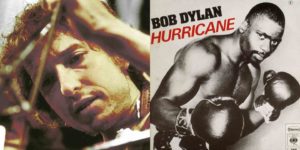
All of Rubin's cards were marked in advance / The trial was a pig-circus he never had a chanceBob Dylan, Hurricane
The song it inspired: In 1975, Carter sent Bob Dylan a copy of his autobiography and the singer consequently visited him in prison. Convinced of his innocence, Dylan was inspired to co-write the eight-minute long Hurricane with Jacques Levy. It explores the perceived injustice done to a man who could have been "champion of the world", and whose "cards were marked in advance" by an "all-white jury". The lyrics cast doubt on the reliability of the witnesses, one of which was himself a petty criminal, causing lawyers to fear libel charges. They asked Dylan to rewrite them.
As well as performing at Carter's prison, Dylan put together two benefit concerts to raise money for the defence at his 1976 retrial. Carter lost, but in 1985 the convictions were overturned when federal justice H. Lee Sarokin ruled the charges had been "predicated upon an appeal to racism rather than reason".
The case: In 1987, a teenage girl hitchhiking home from a rock concert was abducted in Washington State by Gerald Friend, who had already served 20 years in prison for the sexual assault and kidnap of a minor in 1960. Friend was at one point implicated in the Green River murders in Washington State, but was cleared when DNA evidence conclusively identified Gary Ridgway, who is considered the most prolific US serial killer of all time.
The songs it inspired: Leafing through a newspaper in 1987, Nirvana's Kurt Cobain, also Washington-based, read about the case. He was inspired to write Polly, which found its way onto 1991's album Nevermind, and details the incident in the voice of the kidnapper. The chilling, infantilising refrain of "Polly wants a cracker" sinisterly captures the victim's dehumanisation and imprisonment until she luckily escaped.