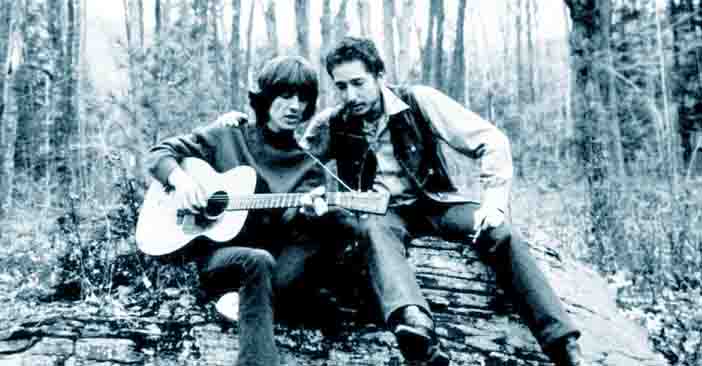
Bob Dylan and George Harrison wrote “I’d Have You Anytime.” in Woodstock, it was November 20, 1968, four years beyond their initial meeting. (Excerpt from Americansongwriter.com, to read the full article click here)
In an interview with Crawdaddy magazine, George spoke in detail about this time with Bob, the origins of the song, and its meaning in his life. Of all the songs on All Things Must Pass, it represented something singular to George, as it wasn’t written within the frustrating and often hurtful fold of The Beatles. as were many of the others, but from a collaboration with Bob Dylan.
GEORGE HARRISON: Iliked different songs for different reasons out of 'All Things Must Pass'. I liked the first song that was on the album, “I’d Have You Anytime,’ and particularly the recording of it, because Derek and the Dominoes played on most of the tracks and it was a really nice experience making that album– because I was really a bit paranoid, musically.
Having this whole thing with The Beatles had left me really paranoid. I remember having those people in the studio and thinking, ‘God, these songs are so fruity! I can’t think of which song to do.’ Slowly I realized, ‘We can do this one,’ and I’d play it to them and they’d say, ‘Wow, yeah! Great song!’ And I’d say, ‘Really? Do you really like it?’ I realized that it was okay… that they were sick of playing all that other stuff. It’s great to have a tune, and I liked that song, ‘I’d Have You Anytime’ because of Bob Dylan.
I was with Bob and he’d gone through his broken neck period and was being very quiet, and he didn’t have much confidence anyhow– that’s the feeling I got with him in Woodstock. He hardly said a word for a couple of days.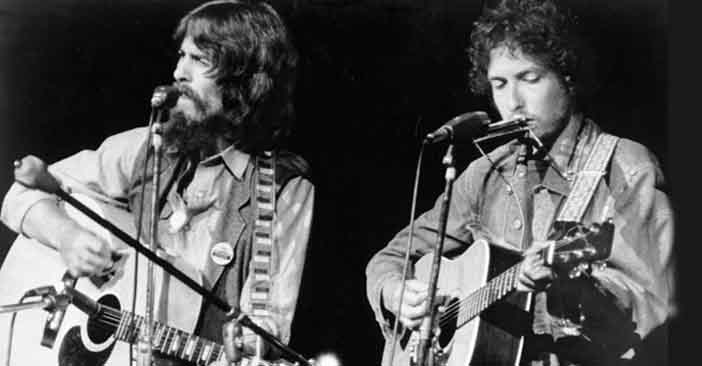
Anyway, we finally got the guitars out and it loosened things up a bit. It was really a nice time with all his kids around, and we were just playing. It was near Thanksgiving. He sang me that song and he was, like, very nervous and shy and he said, ‘What do you think about this song?’ And I’d felt very strongly about Bob when I’d been in India years before– the only record I took with me along with all my Indian records was Blonde On Blonde. I felt somehow very close to him or something, you know, because he was so great, so heavy and so observant about everything. And yet, to find him later very nervous and with no confidence.
I was saying to him, “You write incredible lyrics.” And he was saying, “How do you write those tunes?”
So I was just showing him chords like crazy. Chords, because he tended just to play a lot of basic chords and move a capo up and down. And I was saying, “Come on, write me some words,” and he was scribbling words down. 
And it just killed me because he’d been doing all these sensational lyrics. And he wrote:
All I have is yours
All you see is mine
And I’m glad to hold you in my arms
I’d have you anytime.
The idea of Dylan writing something, like, so very simple!
Before then Dylan had little knowledge of major-seventh chords, which seemed more unusual then. Now all these years since The Beatles and others used them extensively, they do not seem uncommon at all.
GEORGE HARRISON: Bob was saying, “Hey, what about those? Show me some of them chords, those weird chords!”
And that’s how that came about. It’s like a strange chord, really, it’s called G major 7th, and the song has got all these major-7th chords [laughs], so we just kind of turned it into a song. It’s really nice.”