First of all, George didn’t have to push and fight to get his songs on an album. He didn’t have to compromise on anything either. He was free to make music the way he wanted and turn his plethora of songs into a seven-times platinum album.
A lost, never-before-heard psychedelic pop song " Radhe Shaam " featuring George Harrison and Ringo Starr has been unearthed in a Birmingham loft.
The never-before-heardtrack was premiered on Radio Merseyside
Radhe Shaam was written and produced by broadcaster and journalist Suresh Joshi in 1968 for a documentary film, East Meets West.(TheGuardian)
The recording took place at Trident Studios in London, where Harrison and Starr were recording Hey Jude with the Beatles and offered to contribute guitar and drum work to the song.
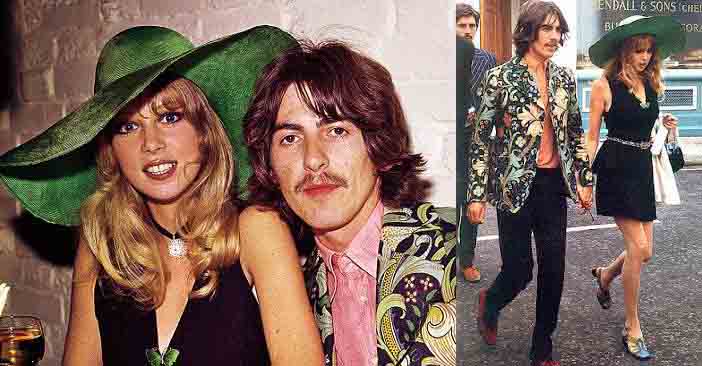
George Harrison was tired of pushing to get his songs on The Beatles’ records
In 1970, shortly after The Beatles broke up, George spoke to WABC-FM New York’s Howard Smith (per Beatles Interviews). Smith said he didn’t know George was a great songwriter because there were few of his songs on Beatles albums.(Cheatsheet)
“It was the way the Beatles took off with Paul and John’s songs, and it made it very difficult for me to get in,” George said. “And also, I suppose at that time I didn’t have as much confidence when it came down to pushing my own material as I have now.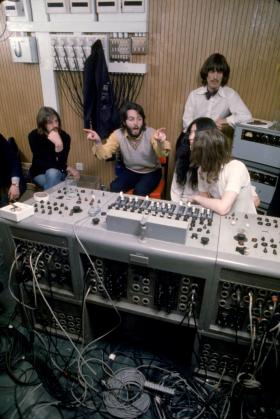
“There are four songs of mine on the double ‘White Album.’ But now the output of songs is too much to be able to just sit around, you know, waiting to put two songs on an album. I’ve got to get ’em out, you know.”
George said The Beatle who “would be the heaviest would get the most songs done. So consequently, I couldn’t be bothered pushing that much.
“Even on ‘Abbey Road’ for instance, we’d record about eight tracks before I got ’round to doing one of mine. Because you say, ‘Well, I’ve got a song,’ and then with Paul — ‘Well I’ve got a song as well and mine goes like this — diddle-diddle-diddle-duh,’ and away you go!
“Because in a way, Paul wants to do his songs his way. He doesn’t want to do his songs my way. And I don’t wanna do my songs their way, really. I’m sure that after we’ve all completed an album or even two albums each, then that novelty will have worn off.”
“It was just difficult to get in there, and I wasn’t gonna push and shout. But it was just over the last year or so we worked something out, which is still a joke really — Three songs for me, three songs for Paul, three songs for John, and two for Ringo.”
Beginning with a pealing riff from Harrison and underpinned by a steady backbeat from Starr, the song features Hindi-language vocals by singer Aashish Khan, but gives plenty of space for both Beatles to add highly distinctive playing. Harrison delivers a long, searching and joyous guitar solo, while Starr adds his characteristic drum rolls and fills.
Joshi rediscovered the recording at his home during lockdown. “It was lost and found many times … suddenly the lockdown was a blessing in disguise,” he told BBC Merseyside, where the song received its first play.
Joshi said he met Harrison at the studio because, as an Indian, “I stood out like a sore thumb … we started talking about philosophy in general.” Harrison’s interest in Indian culture had been deepened by the Beatles’ trip to Rishikesh earlier in 1968, where, led by Harrison, they studied transcendental meditation.
Harrison divulged to Joshi the friction that was already appearing in the band ahead of their 1969 split: “He said he was the underdog … that he had lost his confidence.”
A charity release of Radhe Shaam is being planned. “Leave it to humanity – that’s what George wanted to do,” Joshi said.