He spent Thanksgiving staying with Bob Dylan in New York, penning the delicate ballad "I'd Have You Anytime" with Dylan and jamming with the Band, When he returned to England in December, Harrison felt rejuvenated and ready to resume his day job in the Beatles. "I can remember feeling quite optimistic. I thought, 'OK, it's the New Year and we have a new approach to recording.'"
On January 2nd, 1969, at the Twickenham film studios, and Harrison laid the blame on McCartney. "At that point in time, Paul couldn't see beyond himself," (Harrison was quick to clarify that McCartney had "long since" apologized for any past misdeeds and misunderstandings.)
Future standouts like "Let It Down," "Isn't It a Pity" and even "Something" were all passed over with barely a second glance in favor of Lennon and McCartney's new tracks. The same thing happened the following week, when Harrison brought in "Hear Me Lord," which he'd written over the weekend. Footage shows the band's world famous songwriting duo messing around at the other end of the soundstage while Harrison attempts to demo his latest composition. He would never play it again at a Beatles session.
It's little surprise that he snaps later in the day after McCartney browbeat him over a guitar solo. "I'll play whatever you want me to play, or I won't play at all," Harrison says through clenched teeth. "Whatever will please you, I'll do it." Starr, who had briefly quit the band a few months earlier due in part to being "dominated" by McCartney, was sympathetic. "Paul wanted to point out the solo to George, who would say, 'Look, I'm a guitarist. I'll play the solo,'" he said in The Beatles Anthology. "And he always did, he always played fine solos."
Two days later, on January 8th, Harrison debuted the song "I Me Mine," only to be met with more indifference, and even a snide comment from Lennon. With nerves dulled with an increasingly serious heroin addition, Lennon grew more sullen, withdrawn and infuriating to Harrison.
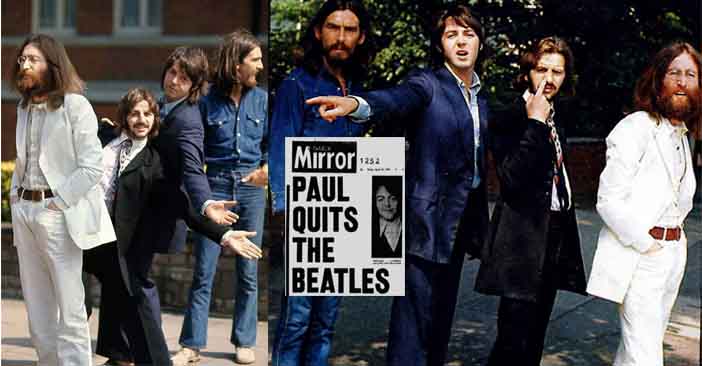
Tensions finally erupted during a lunch break on January 10th. Though the specifics of the argument aren't known for certain, they aren't difficult to guess. Having allegedly come to blows with Lennon, Harrison informed the remaining bandmates that he was done. "I just got so fed up with the bad vibes," he told Musician magazine in 1987. "I didn't care if it was the Beatles, I was getting out." After sarcastically suggesting they advertise for his replacement in the music trade paper NME, he left with a withering "See you 'round the clubs."
He drove home to his bungalow in Surrey, reached for his guitar, and let his anger flow along with the music. Before the afternoon was over, he had composed the furious "Wah Wah." Named in part for a guitar effects pedal, Harrison admitted in his 1980 biography I, Me, Mine that the true message of the song was: "You're giving me a bloody headache." More than just a kiss-off to Lennon and McCartney, it served as a musical declaration of independence to anyone who'd underestimated him.
Back at the studio, Lennon did his best to pretend that the problem wasn't serious. "I think if George doesn't come back by Monday or Tuesday, we ask Eric Clapton to play," he told Get Back director Michael Lindsay-Hogg. "We should just go on as if nothing's happened." Saner heads prevailed, and the band held a series of mediations. Harrison was talked into returning to the fold, but only if they drastically scaled back production on Get Back.
He was back in the studio, but never truly back in the band. After the Beatles split for good in April 1970, "Wah Wah" became the first song recorded for his new album, All Things Must Pass.
Article appeared on www.rollingstone.com By Jordan Runtagh