While working on Low, Gardiner met Iggy Pop and was recruited to the latter’s band in time to tour in support of Iggy’s 1976 album The Idiot and record 1977’s Lust For Life. During the sessions, Gardiner provided the iconic riff for one of Iggy’s biggest hits, The Passenger. (GW)
"Nobody understood my songs, except David Bowie" is a phrase from Iggy Pop that explains his friendship and his extraordinary artistic association with David Bowie.
In the following years, Gardiner would open his own studio, work on computer music techniques and record several solo albums. He became ill in 1995, developing electromagnetic hypersensitivity, which limited his ability to interact with music tech.
Iggy Pop has led tributes to the late guitarist, referencing Gardiner’s notable late-’70s stage wear, writing: “Dearest Ricky, lovely, lovely man, shirtless in your coveralls, nicest guy who ever played guitar. Thanks for the memories and the songs, rest eternal in peace.”
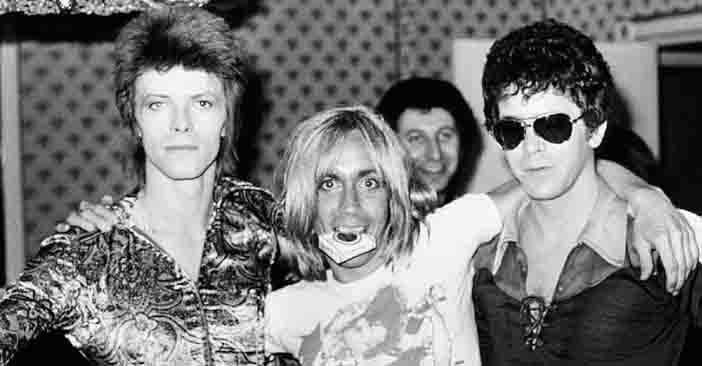
The story begins one night in 1971 in New York: Iggy Pop is at the house of his friend Danny Fields ("I was watching an old movie on television," he said) when my friend went into the legendary Max's Kansas City.
"He called me and told me: there is a person who I think you should know. So even though I didn't want to go out, I went into the Max, went to the counter and there was Danny with David Bowie. " Bowie convinces Iggy to make another album with the Stooges, Raw Power which becomes a great success but when a year later the Stooges disintegrate, Iggy Pop sinks into his madness and is admitted to a psychiatric clinic where David Bowie goes often for a visit . "He resurrected me," Iggy Pop once said.
When he leaves the hospital, Iggy returns to Detroit to his parents, but once again Bowie picks him up ("He came in an absurd car, the neighbors got scared and called the police," Iggy recalled) and takes him with him to the Station to Station tour, where Iggy also plays keyboards with his band.
In 1976 Iggy Pop and David Bowie run away from excesses, fame and their self-destructive side together and go to Berlin, the city was still divided by the Wall.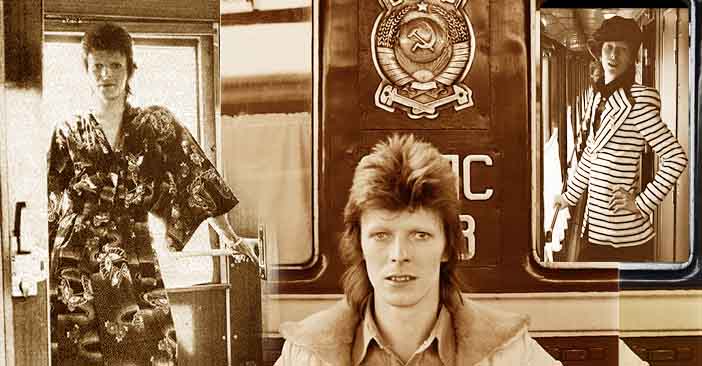
They lived in a house on the first floor of Haupstrasse 155 in the district of Schonberg (which today has been renamed with a commemorative plaque David Bowie Stasse) and enter the Hansa Ton studios next to the Wall in the Potsdamer Platz area, where Bowie records the Berlin trilogy Low, Lodger, Heroes and Iggy Pop his two most famous albums, The Idiot and Lust For Life, produced by Bowie.
For the sessions of the album Lust for Life, Bowie chooses the same band as the Station to Station tour, with Carlos Alomar and Ricky Gardiner on guitar and the two brothers Tony and Hunt Sales on bass and drums to create the unmistakable rhythm of the song that becomes a symbol of Iggy's life and music, the title track Lust For Life.
Iggy Pop creates a text improvising in the studio following the narrative technique of the cut-up created by the writer William Borrughs ("flesh machines", "hypnotising chickens" are just two of the phrases that Iggy creates in time on the music) and inspired by the character of the gigolo Johnny Yenn of the Borroughs Nova Trilogy.
The story is the one about the origin of Lust for Life: in their Berlin apartment Bowie and Iggy always watch the programs of the Armed Forces Network, the channel of the American military who control the West sector of Berlin in the middle of the Cold War.
Among the programs (the TV series Starsky & Hutch which they loved very much) there was always a musical detachment, a repeated electronic sound. According to Iggy Pop, one night Bowie picked up his ukulele and listening to that sound created the riff of the piece that would become the most famous in Iggy Pop's career, especially after being used in 1996 by Danny Boyle in the soundtrack of the cult film Trainspotting. According to Iggy Pop, after creating the riff with his ukulele, Bowie looked at it and said, "This is called Lust for Life.