
Born in Hampstead in December 1946, she was known for hits like As Tears Go By, which reached the UK top 10 in 1964, and for starring roles in films including 1968's The Girl On A Motorcycle.
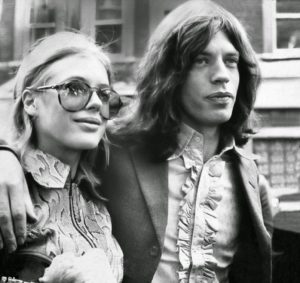
Marianne Faithfull, a pioneering artist who transcended “it girl” status in the Sixties for a stunning second act as a singer-songwriter with great depth, died Thursday at age 78.
“It is with deep sadness that we announce the death of the singer, songwriter and actress Marianne Faithfull,” the singer’s rep said in a statement. “Marianne passed away peacefully in London today, in the company of her loving family.”
"Marianne passed away peacefully in London today, in the company of her loving family.
"She will be dearly missed."
Thrown into fame at a young age, controversy overshadowed much of Faithfull’s early career. She was in a relationship with Jagger from 1966 until 1970 and was pilloried by the press after police raided Keith Richards’ flat for drugs and found her nude, save for a fur bedcover in 1967. Toward the end of the decade, she was homeless and addicted to heroin. After the death of her son, she attempted suicide. She eventually cleaned up in the mid-Eighties, just before redefining herself again with the 1987’s jazzy, cabaret-influenced Strange Weather, which featured a new rendition of “As Tears Go By.”
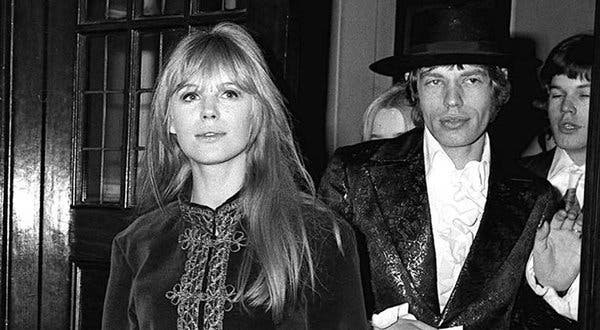
Marianne Faithfull was Jagger’s girlfriend in the 1960s. She’s most famous for a pair of ballads: “As Tears Go By,” which was co-written by Jagger and Keith Richards, and a cover of The Beatles’ “Yesterday.” If anyone has the right to pontificate on the differences between The Beatles and The Rolling Stones, it’s certainly her.
In her book Memories, “As Tears Go by”, singer discussed the two defining British bands of the 1960s. “The Beatles completely evolved from the pop business,” she said. “The Stones began as a Brit Chicago R&B group and then lurched into a more raunchy rig than The Beatles ever managed. When The Beatles stopped touring in 1966 they were still the lovable Fab Four — they were rock ‘n’ roll muppets. The Stones were menacing and sexy.”
Faithfull felt that the distinctions between the two bands could be chalked up to their management. “A lot of that [The Rolling Stones’ menace] had to do with the kind of music they played, with Andrew Oldham, their manager, pushing their bad-boy image and Mick and Keith’s natural bolshiness,” she wrote. “But much of it, too, had to do with Mick’s savvy on the business side.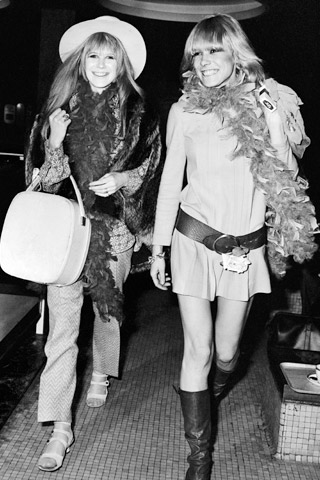
“They never had a manager in the sense of a daddy figure like Brian Epstein telling them what to do — Andrew was younger than they were and more reckless,” she added. “They weren’t dependent on Allen Klein or Andrew — they were their own gang. Also, you have to take into account that The Beatles were the pioneers and nobody had invented proper speakers yet.”
Another thing that separates Oldham from The Beatles’ managers, Epstein and Klein, is that Oldham was a musician. Oldham worked on classic Rolling Stones tunes such as “(I Can’t Get No) Satisfaction,” “Get Off of My Cloud,” “Let’s Spend the Night Together,” and “Have You Seen Your Mother, Baby, Standing in the Shadow?” Meanwhile, Epstein and Klein were just business people.
Decades after having a fling behind Mick Jagger's back, Keith Richards and Marianne Faithfull met again while the Rolling Stones were on tour
Keith slept with Mick's then girlfriend, Marianne, to get revenge for Mick stealing his girlfriend, the late Anita Pallenberg. The pair had a one-night stand in the 1960s, which ended abruptly when Keith escaped through a window clutching his clothes as Mick approached.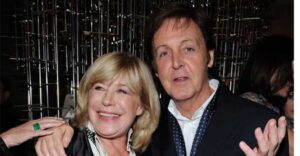
His revenge by sleeping with Marianne - which he claims only happened once - was cut short when Jagger came home early.
Their "hot and sweaty" episode was interrupted when Richards "did one out the window" clutching his clothes, although he accidentally forgot his socks. She revealed: "Marianne and I still have this banter. She texts me: 'I still can't find your socks.'"