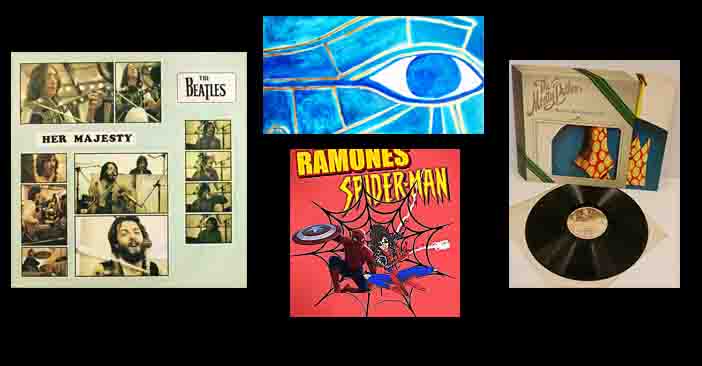
At 18, he was charged with putting together rough mixes of the Beatles’ Abbey Road medley (the 16-minute run of short songs from You Never Give Me Your Money to The End). The fourth song of this series, originally, was Paul McCartney’s Her Majesty. “I played it back to him at 2, 3am – very late, anyway. [Paul] said, ‘That’s all great, but take Her Majesty out now; it doesn’t work.’”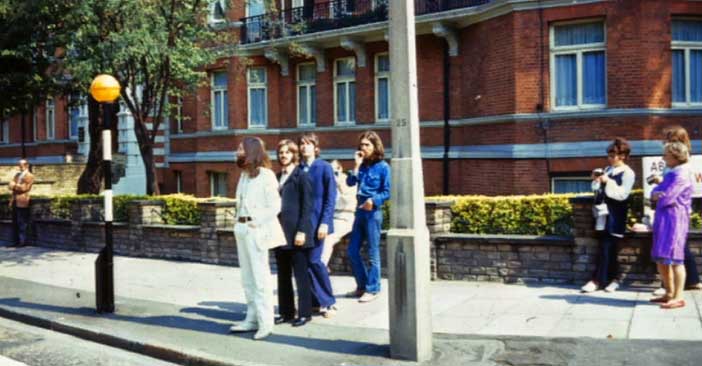
Studio rules meant any edited material had to be left at the end of the mix, so Kurlander left nearly 20 seconds before Her Majesty, and put the tape in Abbey Road’s tin of masters – crucially, not the basic cardboard box that they used for rough cuts. He added a note for mastering engineer, Malcolm Davies, saying why he had done this.
But Davies, who had recently relocated to the Beatles’ Savile Row Apple studio, didn’t understand the note. “He couldn’t just come and find me and ask,” says Kurlander, “so he just went and cut the acetate.”
CDs allowed the inclusion of a song in the “pregap” – the space before track one, only accessible by pressing rewind (interestingly, this still cannot be read by computers while uploading tracks today).
Ash put their debut single, Jack Names the Planets, in this space on their album 1977; Super Furry Animals put pregap tracks on 1997’s Guerrilla and the 1998 compilation Out Spaced; and Unkle, the James Lavelle/DJ Shadow outfit, inserted a track teeming with samples of their influences on 1998’s influential Psyence Fiction.
Some people still use the pregap. Arcade Fire’s album, Reflektor, includes a 10-minute hidden instrumental, played in reverse.
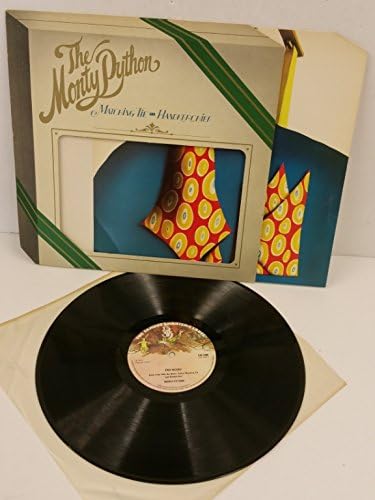
One that really kind of stands out is Monty Python. They basically created an album called 'The Monty Python Matching Tie and Handkerchief.' It came out in 1973 and the trick of the record is that both sides of that record were listed as Side Two. One of the sides of the record actually had a double groove to it."
This double groove was the result of the record being mastered with two concentric grooves on side two so that different content would be played according to where the stylus was placed down on the surface of the record.
In October 1969, a caller to a Detroit radio station argued that the phrase “turn me on, dead man” could be heard when the White Album’s Revolution 9 was played backwards.
Other theories suggested that, when played backwards, ‘mumbling’ by John Lennon between the songs I’m So Tired and Blackbird sounds like “Paul is a dead man. Miss him.” The band’s press office rebutted the rumour on 21 October, calling it “a load of old rubbish”, and an interview with McCartney in LIFE magazine’s November edition – featuring the headline ‘Paul is still with us’ – helped to kill it off.
Some hidden messages still make little sense once their words are clear. In Pink Floyd’s song Empty Spaces from their 1979 rock opera The Wall, Roger Waters can be heard saying “Congratulations. You've just discovered the secret message. Please send your answer to Old Pink, care of the funny farm, Chalfont…” A voice in the background shouts “Roger! Carolyne is on the phone!” before he can reveal the location. Some believe ‘Old Pink’ refers to the band’s former lead singer Syd Barrett, who suffered a breakdown in 1968.
[columns]
[column size="1/2"]
[/column]
[column size="1/2"]
[/column]
[/columns]
Let it All Hang Out by John Mellencamp (on Big Daddy)
Who made the call to leave this cover of the Hombres‘ late ’60s song off the tracklist isn’t known, but it was later released as a single.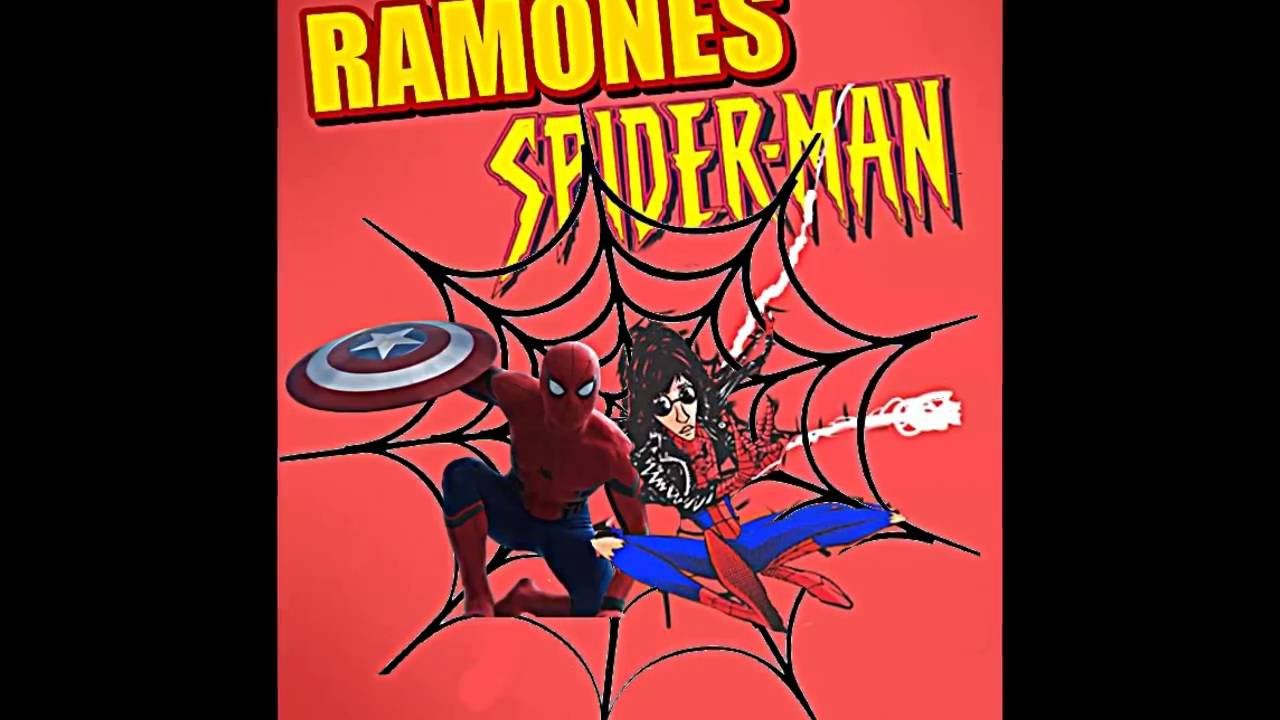
Spiderman by the Ramones (on Adios Amigos)
It plays at the end of Born To Die in Berlin and was used in a television commercial for Spider-Man toys in Australia
11. Jugband Blues by Pink Floyd (on A Saucerful of Secrets)
A weird track from Syd Barrett on his final Pink Floyd album – ah, the sound of late ‘60s prog rock!