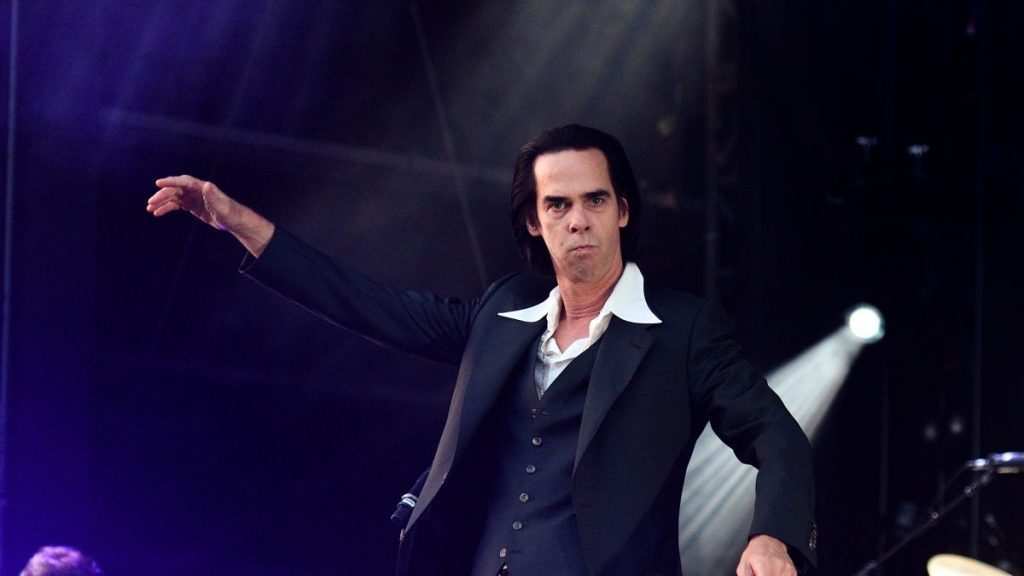
Nick Cave has shared his thoughts on Russell Brand‘s new book about his conversion to Christianity.
This is, hands down, the most uncomfortable two minutes I’ve watched in a long time. Russell Brand is asked to identify a Bible verse relevant to his, um, legal battles and spends a few minutes clumsily thumbing through Scripture and arrives at nothing. pic.twitter.com/KS0ZQTg6t2
— Charlotte Clymer 🇺🇦 (@cmclymer) April 25, 2026
Brand said in 2024 that he was getting baptised in 2024 “to leave the past behind” and the ceremony took place in May of that year, with Bear Grylls – who is also a devout Christian – present.
Notably, his conversion took place after he was accused of multiple counts of rape, assault and emotional abuse between 2006 and 2013 in a joint investigation between Channel 4, The Times and Sunday Times the year prior.
He is currently awaiting trial on counts of rape and sexual assault, having been charged in April 2025 against four women, while further charges against two women were brought in December. Brand has denied all claims and pleaded not guilty to all the charges.
Now, Cave – who has spoken of his long-held interest in Christianity and religion in general – has shared his thoughts on the book.
In response to a fan named Barry from London asking his opinion on it via his website Red Hand Files, Cave wrote: “Good for atheism.”
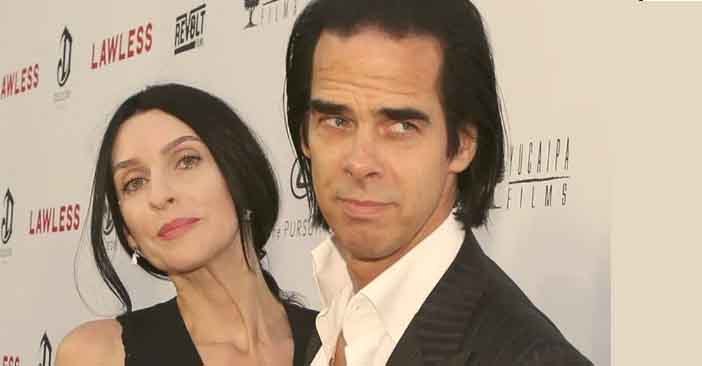
Cave has previously responded to fan questions on matters such as prayer. in 2020, he wrote: “The act of prayer is by no means exclusive to religious practise because prayer is not dependent on the existence of a subject. You need not pray to anyone. It is just as valuable to pray into your disbelief, as it is to pray into your belief, for prayer is not an encounter with an external agent, rather it is an encounter with oneself.
“There is as much chance of our prayers being answered by a God that exists as a God that doesn’t. I do not mean this facetiously, for prayers are very often answered. A prayer provides us with a moment in time where we can contemplate the things that are important to us, and this watchful application of our attention can manifest these essential needs.”
He added: “The act of prayer asks of us something and by doing so delivers much in return — it asks us to present ourselves to the unknown as we are, devoid of pretence and affectation, and to contemplate exactly what it is we love or cherish. Through this conversation with our inner self we confront the nature of our own existence.”