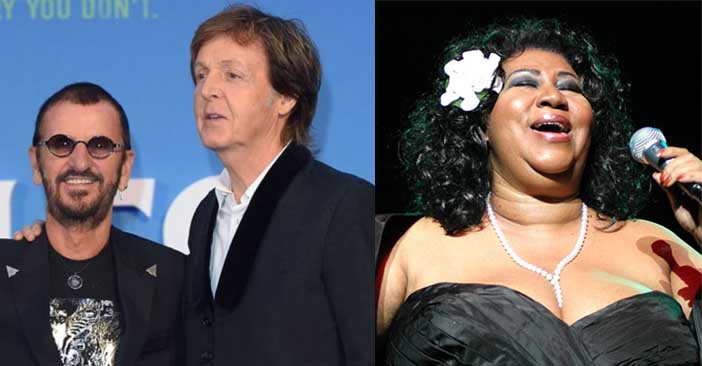
(Source Rolling Stone.com) The Queen was also one of history’s most audacious Beatle fans. Nobody ever sang the Beatles like Aretha. Since she was one of the few Sixties musicians as famous and revered as they were, she felt free to take any approach she pleased to a Fabs song — sometimes radically reworking it, as when she sang “Eleanor Rigby” in the first person. When Aretha sang any song, even a Beatle song, she claimed it as her own — and the Beatles knew it. Nothing could make them prouder than getting one of their songs stolen by the Queen. When Paul McCartney wrote “Let It Be,” he sent an acetate demo to Aretha in hopes she’d record it, knowing full well she’d outsing him on it. (Needless to say, she did.)
Let’s all take a moment to give thanks for the beautiful life of Aretha Franklin, the Queen of our souls, who inspired us all for many many years. She will be missed but the memory of her greatness as a musician and a fine human being will live with us forever. Love Paul pic.twitter.com/jW4Gpwfdts
— Paul McCartney (@PaulMcCartney) August 16, 2018
“Let’s all take a moment to give thanks for the beautiful life of Aretha Franklin, the Queen of our souls, who inspired us all for many, many years,” McCartney wrote, paired with a photo that was shot looking up at her as if in awe. “She will be missed but the memory of her greatness as a musician and a fine human being will live with us forever. Love Paul.”
Aretha claims her place in the story by switching it to the first person, singing, “I’m Eleanor
Rigby / I pick up the rice in the church where the weddings have been, yeah.” It’s a boldly in-your-face reinvention of the song, with the Muscle Shoals house band revving up the R&B tempo.
The Beatles’ original got botched in the studio, buried under Phil Spector’s maudlin strings and that god-awful vocal choir. It took Aretha to bring out the loneliness and pain in this song—she adds the gospel grit that the original was striving for, with a little help from Beatle pal Billy Preston on the organ. But she hears an even sadder story in the song than Paul McCartney did. She ends it by chanting the lines “Many times I’ve been alone and many times I’ve cried”—she refuses to even hint at a happy ending. Aretha never finds out if she’s ever going to get through that door, and neither do we. One of the Queen’s most brilliant and heartbreaking performances.
RELATED