The first batch was released on September 20.
Three of the five albums are from the post-Wings era in the period, in the early 1980s, where Paul was a solo artist again and enjoyed significant chart success with singles such as ‘Coming Up’, ‘Ebony and Ivory’, ‘Pipes of Peace’ and ‘Say Say Say’ (all number ones in America and/or the UK). The albums in question are:
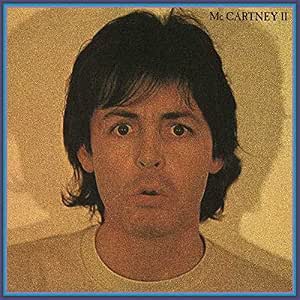
McCartney II (1980)
Tug of War (1982)
Pipes of Peace (1983)
CHOBA B CCCP aka ‘The Russian Album’ (1988)
Flowers in the Dirt (1989)
As with the SHM-CDs that made up ‘Batch 2’, albums that have not received the Archive Collection treatment (in this case 1984’s Give My Regards to Broad Street and 1986’s Press to Play) are sadly excluded from this campaign. CHOBA B CCCP, or ‘The Russian Album’, is the exception.
These are sometimes called ‘paper sleeve’ editions and and each is presented as vinyl replica CDs with the usual exacting standards from Japan including OBI-strip, extra booklet with Japanese lyrics, ‘rice paper’ sleeve for disc protection and re-sealable outer clear sleeve. Original inner sleeves are recreated as is the original packaging (McCartney II and Pipes of Peace are gatefolds, the other three are not).
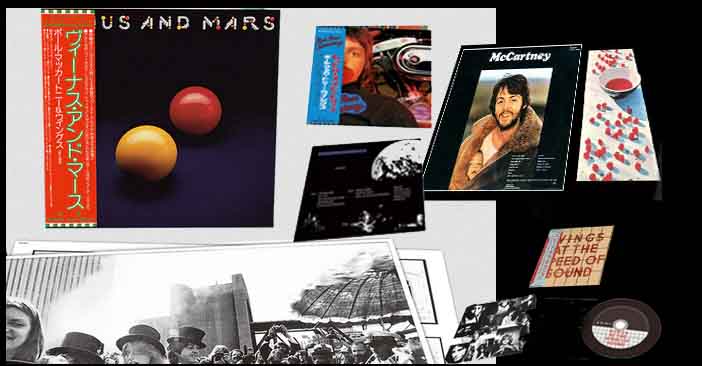
McCartney has shared that Wings albums Venus And Mars, Wings At The Speed Of Sound, Wings Over America, and Wings Greatest will be released in the special format, in addition to Percy Thrills Thrillington’s Thrillington. (UDM report)
Released in 1975, Venus And Mars was the first of two albums to feature what many (Paul included) regard as the perfect Wings lineup, with the McCartneys and Denny Laine joined by guitarist Jimmy McCulloch and drummer Joe English. Recording was done in New Orleans and Los Angeles. This album encompasses the 2014 remaster and includes two miniature posters, three stickers, an innersleeve and booklet, which features the Japanese translations of the lyrics.
These limited-edition Japanese SHM-CD exports come with paper-sleeves, and the unique package features original LP replica sleeves with original finishes and artwork. Lastly, the releases come with a miniature of a Japanese obi-strap.
Check the albums preorder here
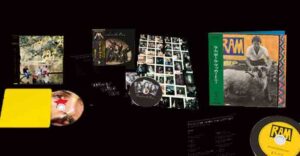 Releases set to arrive via Japanese SHM-CD encompass: Paul McCartney – McCartney; Paul & Linda McCartney – Ram; Paul McCartney & Wings – Wild Life; Paul McCartney & Wings – Red Rose Speedway; and Paul McCartney & Wings – Band On The Run.
Ram, which was released in 1971, was the only album credited to both Paul and Linda McCartney. Ram reached no.1 in the UK and stayed in the US Top 10 for five months. Recording after he’d left The Beatles and before the formation of Wings, Paul initially flew with Linda to New York to record the songs they’d written but arrived without a band.
Wild Life, which was also released in 1971, served as the introduction of Wings. The album wasn’t a real reflection of what was to come, instead a guiding ethos was Paul’s intention to record the entire piece quickly. Taking just two weeks, Wild Life was about spontaneity: the opening track “Mumbo’”was recorded in one take.
Released in 1973, with the addition of Irish guitarist Henry McCullough, Wings plugged away on their second album Red Rose Speedway through most of 1972, a year in which they issued no album (a first for Paul since The Beatles’ debut). By December they’d accumulated a vast amount of songs, though the idea of releasing a double-album was eventually rejected.
Paul McCartney has recorded 22 number one albums and over a music career that spans six decades.McCartney, who has sold 700 million albums across the globe, has now been awarded the Official Chart Record Breaker Award, which recognises him as the UK’s most successful albums act of all time.
McCartney recorded it in secrecy, mostly using basic home-recording equipment at his house in St John’s Wood. Mixing and some recording took place at professional London studios. In its loosely arranged performances, McCartney eschewed the polish of the Beatles’ past records in favour of a lo-fi style. Apart from occasional contributions by his wife, Linda, McCartney performed the entire album alone by overdubbing on four-track tape. (Wikipedia)
"They were almost throwaways, you know? But that’s why they were included. They weren’t quite throwaways. That was the whole idea of the album: all the normal things that you record that are great and have all this atmosphere but aren’t that good as recording or production jobs. Normally that stuff ends up with the rest of your demos, but all that stuff is often stuff I love". -Paul McCartney
McCartney recorded the album during a period of depression and confusion, following John Lennon’s private departure from the Beatles in September 1969. Conflicts over the release of McCartney’s album further estranged him from his bandmates, as he refused to delay the album’s release to allow for Apple’s previously scheduled titles, notably the Beatles’ album Let It Be. A press release in the form of a self-interview supplied with UK promotional copies of McCartney led to the Beatles’ break-up.
John Lennon: "I was surprised it was so poor. I expected just a little more"
The earliest song on McCartney, Hot As Sun, dated from the Quarrymen days.
In this press release, which was sent with promotional copies of his self-titled debut solo album, Paul answered questions he assumed he would have been asked had he done a press conference. As well as talking about the new album, he spoke about The Beatles’ future – or lack of it. (UDM)
Q: Are you planning a new album or single with the Beatles?
A: No.Q: Is this album a rest away from The Beatles or the start of a solo career?
A: Time will tell. Being a solo album means it’s “the start of a solo career…” and not being done with The Beatles means it’s just a rest. So it’s both.Q: Is your break with The Beatles temporary or permanent, due to personal differences or musical ones?
A: Personal differences, business differences, musical differences, but most of all because I have a better time with my family. Temporary or permanent? I don’t really know.Q: Do you foresee a time when Lennon-McCartney becomes an active songwriting partnership again?
A: No.
His first number one came in 1963 when The Beatles released Please Please Me, which is also the longest-running number one debut album in chart history with 30 weeks in the top spot. The 74-year-old's most recent number one album came in 2000, with The Beatles's compilation album, 1.
In a statement to the Official Charts Company, McCartney said: "Okay, you know how it really feels? It feels unbelievable, because when you write your songs you don't count how well they're doing."I remember when Please, Please Me went to number one, that was our first number one record, and it's a beautiful feeling to suddenly get this [award], I mean it's amazing."So thank you to the people for giving it to me, I love you. And thank you to everyone who made it possible by buying the records, we love you too."The chief executive of the Official Charts Company, Martin Talbot, said: "It is a huge honour for the Official Charts to pay tribute to Paul McCartney’s incredible achievements with this special award.Over more than 50 years, Paul has been a fixture on the British and world music scene – so to recognise his contribution as part of the UK Albums Chart’s 60th birthday feels absolutely appropriate."
Paul McCartney's career in numbers
22 – number one albums across Paul McCartney’s career (15 – The Beatles; 2 – Wings; 4 – solo; 1 – Paul & Linda McCartney)
191 – weeks Paul McCartney has spent at number one on the Official Albums Chart across his career
5.1m – UK copies sold of Sgt. Pepper’s Lonely Hearts Club Band, Britain’s biggest-selling studio album of all time
30 – weeks that The Beatles's Please Please Me spent at number one, the longest-running debut Number 1 album ever
Paul McCartney’s 22 Number 1 albums
1963 – Please Please Me (The Beatles)
1963 – With the Beatles (The Beatles)
1964 – A Hard Day's Night (The Beatles)
1964 – Beatles for Sale (The Beatles)
1965 – Help (The Beatles)
1965 – Rubber Soul (The Beatles)
1966 – Revolver (The Beatles)
1967 – Sgt Pepper's Lonely Hearts Club Band (The Beatles)
1968 – The White Album (The Beatles)
1969 – Abbey Road (The Beatles)
1970 – Let It Be (The Beatles)
1971 – Ram (Paul & Linda McCartney)
1974 – Band on the Run (Paul McCartney & Wings)
1975 – Venus and Mars (Wings)
1977 – The Beatles Live at the Hollywood Bowl (The Beatles)
1980 – McCartney II (Paul McCartney)
1982 – Tug of War (Paul McCartney)
1984 – Give My Regards to Broad Street (Paul McCartney)
Source: Official Charts Company