As the Recording Academy adds Best Album Cover to the Categories for the 2026 GRAMMYs, revisit some of the most memorable and impactful artwork from the 1960s to today.
Whether viewed via a cardboard sleeve, plastic jewel case, or online thumbnail, the album cover can be pivotal to the perception of the music it envelops. After all, long before a single note has been played, it essentially serves as a record's first taster. None more so than in the pre-streaming, crate-digging age when consumers had to venture into brick-and-mortar stores, often relying on little more than an eye-catching image to choose their latest pet sound. Now, in time for the 2026 GRAMMYs, the Recording Academy has added a new Category celebrating what is very much an art form in its own right.
The concept of adding artwork to an album cover is credited to Alex Steinweiss, an art director hired in 1938 by Columbia Records to make the typical brown paper bags a little more aesthetically pleasing. By the end of the following decade, the practice had become commonplace, and pretty soon, creatives such as Neil Fujita, Bob Cato and Reid Miles were able to build entire careers on making vinyl pop off the shelf. (Source Grammy.com)
1960s
1960s Album Covers Collage
Jimi Hendrix — Are You Experienced
The Jimi Hendrix Experience gave us two classic album covers for the price of one with their game-changing 1967 debut. Shot by Bruce Fleming, the original U.K. sleeve featured its eponymous frontman adopting a Dracula-like stance next to bandmates Noel Redding and Mitch Mitchell. But for its North American release, Karl Ferris repositioned the trio as a "group travelling through space in a Biosphere on their way to bring their unworldly space music to earth." Taken at Kew Gardens via the du-jour style of the fisheye lens, its deeply psychedelic aura was considered a much better fit for the Summer of Love.
The Beatles — Abbey Road
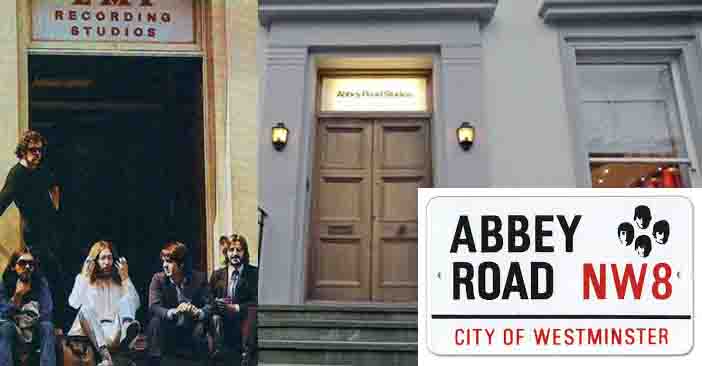
The Beatles literally stopped traffic while shooting the cover that turned an otherwise unremarkable London street into a tourist landmark. The Fab Four had initially planned to hike up the Himalayas for their 11th LP, but eventually decided a zebra crossing walk outside their EMI recording studio would suffice. Photographer Iain MacMillan was given just 10 minutes to capture the legends in all their sharp-suited — and in Paul McCartney's case, barefoot — glory. Of course, the Merseysiders' entire back catalog could have graced this list. But despite their label's concerns over the lack of a title or band name, it's Abbey Road's portrait of both unity and individuality that remains the group's defining image..
The Doors — Morrison Hotel
In one of those remarkable twists of popcultural fate, Ray Manzarek just happened to stumble across an L.A. establishment with the exact same name of the album he was scouting cover locations for. It needed a spot of subterfuge, however, for the stars to truly align. Indeed, with its front-of-house receptionist unwilling to play ball, The Doors and photographer Henry Diltz had to wait until he was called away, and in a matter of just seconds, snap the contemplative window gaze that ironically would put the Morrison Hotel on the global map.
Velvet Underground & Nico — Velvet Underground & Nico
No-wave pioneers Velvet Underground and self-proclaimed "Chelsea Girl" Nico also omitted their names on the cover to their seminal self-titled debut, allowing its designer to take full credit instead. After all, it was Andy Warhol's idea to represent their magnum opus with the image of a moldy banana, and on its early pressing, tempt record buyers to "peel slowly and see." It was a typically playful approach that counterbalanced the dark and discordant sounds hidden within. This is the moment where modern art and modern pop truly collided.
1970s
1970s Album Covers Collage
Cream — Disraeli Gears
Australian artist Martin Sharp certainly ensured that Cream's second album Disraeli Gears stood out from the crowd. The multi-talent, who also co-wrote Side B's opener "Tales of Brave Ulysses," attempted to capture its fluorescent sound with a decidedly trippy collage of colors, florals and photos taken in London's Hyde Park and Scotland's Ben Nevis. Presiding over all the organized chaos are the trio themselves, including an atypically clean-shaven Eric Clapton, positioned like the Mount Rushmore of psychedelic rock.
Joy Division — Unknown Pleasures
The Cambridge Encylopaedia of Astronomy might not initially appear to be the stuff of British post-punk history. But it was while perusing the 1977 tome that Joy Division guitarist Bernard Sumner spotted a series of pulsar radio waves that subsequently became the scene's defining image. With a little help from Factory Records designer Peter Savile, who reversed the original's black and white lines to make it look 'sexier,' the cover perfectly encapsulated the stark, atmospheric and curious nature of the Mancunians' cult classic Unknown Pleasures, and nearly a half-century on, it remains a T-shirt favorite.
Pink Floyd — The Dark Side of the Moon
A Black Magic chocolate box was the brief given to album cover maestros Hipgnosis for Pink Floyd's pièce de résistance The Dark Side of the Moon. Just as they'd done with their previous collaborations with the prog-rockers, designers Aubrey Powell and Storm Thorgerson thought completely outside the box — or should that be prism — using a striking combination of colors and physics for a sleeve that perfectly reflected the group's visually dazzling live shows. It's an image that has become synonymous with the Brits more than any other, proving that sometimes, the simplest ideas really are the best.
The Clash — London Calling
"Unfortunately, you always sort of tend to destroy the things you love," bassist Paul Simonon once remarked, referring to the iconic cover of The Clash's London Calling. The bassist had smashed his guitar to smithereens during a 1979 gig at New York's Palladium in frustration of some overzealous security. And while photographer Pennie Smith believed her snap — accompanied by green and pink lettering inspired by Elvis Presley's self-titled debut — was too out of focus to grace the double album, it proved to be the perfect visualization of punk rock's defiance.
The Rolling Stones — Sticky Fingers
Four years after his banana peel stunt, Andy Warhol once again toyed with the concept of the album sleeve for the Rolling Stones' ninth LP Sticky Fingers. This time, he incorporated a working zipper and perforated belt buckle which, when opened, revealed a pair of white briefs emblazoned with his famous name. Contrary to popular belief at the time, the crotch in question didn't belong to the group's rubber-lipped frontman. Not that designer Craig Braun was forthcoming in quashing the rumor: "If girls think that that's Mick's d—, we're going to sell more albums," he later admitted about the gimmick, which took cover artwork to new provocative heights.
Run-D.M.C. — Raising Hell
"I hate to admit it but there wasn't a 'concept' concept for that album," art director Janet Perr has admitted about her work on Run-D.M.C.'s mainstream breakthrough. Yet it was by capturing the hip-hop pioneers at their true essence, without any bells or whistles, that made Raising Hell's artwork so authentic. Although their signature Adidas trainers are out of sight, Joseph "Run" Simmons and Darryl "D.M.C." McDaniels (not officially signed to their Profile Records label, Jam Master Jay was restricted to the back cover) still ooze Hollis cool.
Talking Heads — Remain in Light
Talking Heads' Chris Frantz and Tina Weymouth drew upon the knowhow of the Massachusetts Institute of Technology to create one of the first computer-generated album covers. Relegating their initial plans of a warplane collage to the back, Remain in Light instead splashes portrait photos of all four members with crude red 'paint' for a disturbing image that makes them resemble bloodied bank robbers. The inverted "A"s in the group's name only adds to the sense of unease.
blink-182 — Enema of the State
blink-182 promoted their second album Enema of the State with a blend of toilet humor and scantily clad visuals that perfectly aligned with the success of American Pie. The Californians apparently didn't know that model Janine Lindemulder — who they also chased in the promo for "What's My Age Again" — was in the adult entertainment industry when she was selected to brandish the blue glove in a provocative nurse's outfit. But a generation of hormonal teens, who ensured the cover art adorned more bedroom walls than any other at the turn of the century, thanked them anyway.
Britney Spears — ...Baby One More Time
While most international audiences saw a solemn Britney Spears praying angelically for the cover of her all-conquering debut album, her homeland's fans were treated to a more carefree image that better reflected her Mickey Mouse Club past. The teen princess looks the height of innocence as she kneels down smiling while surrounded by pastel pink. ...Baby One More Time's cover art essentially signaled an era in which pop became a playground for the girls (and the boys) next door.
Lauryn Hill — The Miseducation of Lauryn Hill
Lauryn Hill went back to school to help sell the solo debut that promised a glittering career ahead. Indeed, alongside photographer Eric Johnson, the ex-Fugees singer returned to her New Jersey alma mater for a series of hallway, classroom and bus shots that tied in with the album title's theme. But it was the woodshop that appeared to inform The Miseducation's front cover, with Hill's familiar face cleverly made to look as though it had been etched on a timber desk. It's still one of the hip-hop scene's most unique covers, and perhaps all the more special because the multiple GRAMMY winner has still never been properly followed up.
Nirvana — Nevermind
Spencer Elden became the world's most famous baby in 1991 when an image of his naked four-month-old self swimming underwater (and chasing a string-tied dollar bill) adorned grunge's ultimate blockbuster.Nirvana's defiant Kurt Cobain, who'd conceived the idea after watching TV footage of water births, refused to cover the youngster up, insisting the only sticker he'd allow is one reading, "If you're offended by this, you must be a closet pedophile." Unfortunately, despite previously celebrating his contribution to Nevermind's success, the grown-up Elden is now trying to sue the band for "lifelong damages." Even so, it remains one of rock music's most striking (and unforgettable) images.
Amy Winehouse — Back to Black
"Amy was four hours late. She'd been partying all night. But she still managed to be cool and crazy." Photographer Mischa Richter certainly appeared to get the full Amy Winehouse experience when shooting the soul singer for the future GRAMMY-winning Album Of The Year Back to Black. Without knowing it, she also brilliantly captured the record's essence in a snap at her very own London home. Richter had no idea of the album's title when she snapped Winehouse in a darkroom adorned with blackboard paint. Showing little sign of the troubles ahead, the simple but effective image remains one of the most indelible of her tragically short career.
Gnarls Barkley — St. Elsewhere
Super producer Danger Mouse and soul man Cee Lo Green concocted a wild backstory for their chart-topping side project, claiming that Gnarls Barkley was a pal of Isaac Hayes, a former boyfriend of Mariah Carey, and a one-time English teacher for electro wizards Kraftwerk. Little surprise, therefore, that the cover for their debut album St. Elsewhere is similarly madcap, its nuclear explosion producing a cloud filled with everything from skyscrapers and speared army helmets to palm trees and purple tigers. It's a piece of art that practically demands listeners to give it their undivided attention.
Katy Perry — Teenage Dream
After approaching the aptly named confectionary-based artist Will Cotton with the sole intention of buying a painting, Katy Perry was then persuaded to pose for one instead. The result, which sees the chart-topper lying nude in a cloud of pink cotton candy, ended up gracing the cover of the seven-time GRAMMY nominee Teenage Dream. Committing even further to the sweet concept, a limited number of sleeves were also sprayed with a bubblegum-like scent. Perry continued to apply its vivid color scheme throughout her imperial phase, inspiring numerous other big pop girls to embrace their playful, irreverent side, too.
Rihanna — Anti
It's now been nine years since Rihanna committed to a full-length studio effort. But if Anti does prove to be Rihanna's last ever album cover, then she sure went out in style. Roy Nachum's striking artwork presents the Barbadian not as a world-famous adult, but a balloon-holding girl attending her first trip to daycare while blindfolded by a gold crown. "Sometimes the ones who have sight are the blindest," the superstar explained about the sleeve, which also came accompanied with a Chloe Mitchell poem written in Braille. It was a design that expertly reflected Rihanna's evolution from teen R&B princess to serious artiste.
Charli xcx — brat
There's not many album covers that can claim to have owned an entire season. But the lime green (Pantone 3507C, to be precise) artwork for Charli xcx's zeitgeist-defining sixth LP did just that, spearheading what would become known as Brat Summer. "I wanted to go with an offensive, off-trend shade of green to trigger the idea of something being wrong," the party starter explained about the remarkably effective sleeve that, despite its apparent simplicity, took five months to execute. The fact that everyone from the London Mayor to Kamala Harris adopted the same aesthetic proved it was very right.