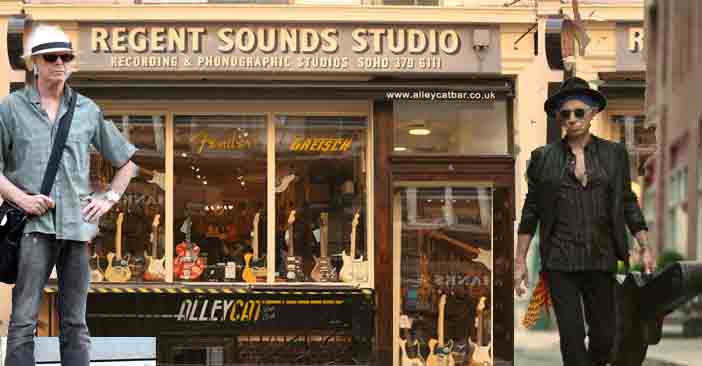
The Regent Sounds recording studio on “Tin Pan Alley” in London was famously used by Jimi Hendrix, David Bowie and the Rolling Stones between the 1960s and early 1980s. Now, having been walled up and lain silent for decades, it is being brought back to life through a multimillion-pound investment that will turn it into a landmark site for rock’n’roll, jazz and blues, the Guardian has learned.
Much of the original walls, floor tiles and recording equipment have been preserved from a studio that Pete Townshend, The Who’s guitarist and songwriter, once described as “a massive chunk of rock music history”.
An archive of memorabilia has been unearthed and historic items will be shown in exhibitions at the site on Denmark Street, nicknamed Tin Pan Alley as a historic hub for music publishers, instrument shops and songwriters since the early 20th century.
Exhibits will include T-Bone Walker’s fabled 1949 Gibson guitar – the instrument that kickstarted the music revolution of the 1950s, inspiring countless artists from Chuck Berry and BB King to Keith Richards.
The Regent Sounds guitar shop, within the same 18th-century building, has been extended, quadrupling its previous space and offering soundproof booths for the public to try out instruments.
It was at Regent Sounds where in 1967 the Beatles recorded Fixing a Hole, a key track on Sgt Pepper’s Lonely Hearts Club Band.
Paul McCartney once recalled that a man claiming to be Jesus Christ turned up at the door. “I said: ‘Well, you’d better come in then.’ I thought, well, it probably isn’t. But if he is, I’m not going to be the one to turn him away … So I said: ‘If you promise to be very quiet and just sit in a corner, you can come.’ I introduced him to the guys. They said: ‘Who’s this?’ I said: ‘He’s Jesus Christ.’ We had a bit of a giggle.”
The Rolling Stones recorded their first big hit, Not Fade Away, at Regent Sounds. Keith Richards once recalled: “We did our early records on a two-track Revox in a room insulated with egg cartons.