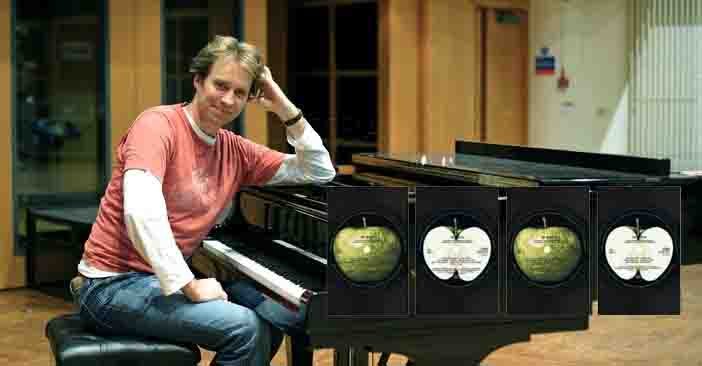
Martin — the son of original Beatles producer George Martin, and now a sought after producer, arranger and audio expert in his own right — sat down to talk with Variety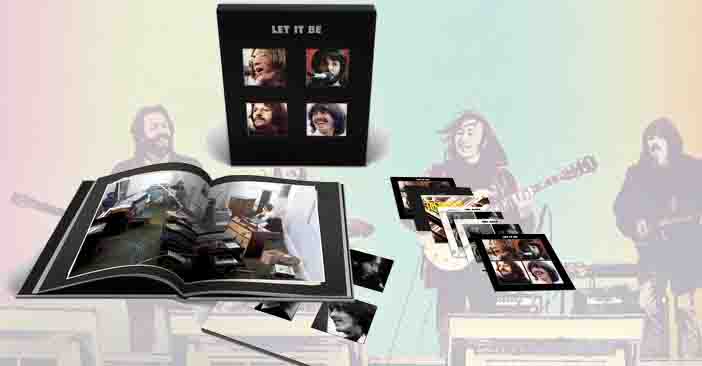
Excerpt from the original Variety interview, to read the full article click here
VARIETY: How much did your work on the film and on the boxed set overlap, or did you think of them as completely separate processes?
MARTIN: You do approach things differently, because when you think about what you’re going to add as extras to a boxed set, if something is on the film and looks really good but may not sound that good, you keep it to the film.
But if it’s something that should be on a record, it should be on a record. When you’re considering how much to include from outtakes, there was, like, 52 hours of material.
And we’re mixing the films, so we knew what they were working on as well. … The boxed set is almost trying to tell the story of the (entire) record, including the Phil Spector stuff. And obviously the film is just purely tied to that period of time in Twickenham (Film Studios) and (at Apple Corps headquarters) in Savile Row. It ends with the rooftop — the natural end of that story.
“Let It Be” was only (recorded over) a relatively short period time – it was three weeks.
All of (the material from Twickenham) is on Nagra, which is the old format of recording film. It’s a mono, single, narrow tape format. When they move out of Twickenham — because that’s when they’re getting pissed off at everything, and it’s cold, and they start at 10 in the morning, and George walks out and all that sort of stuff — they go to Savile Row, where Billy Preston is, and that’s where they have the (multi-track) recording. And then the rooftop (concert) obviously is 8-track. It is what it is, and yeah, we throw as much technology at these things as you can, but you have to be careful when you’re doing restoration work.