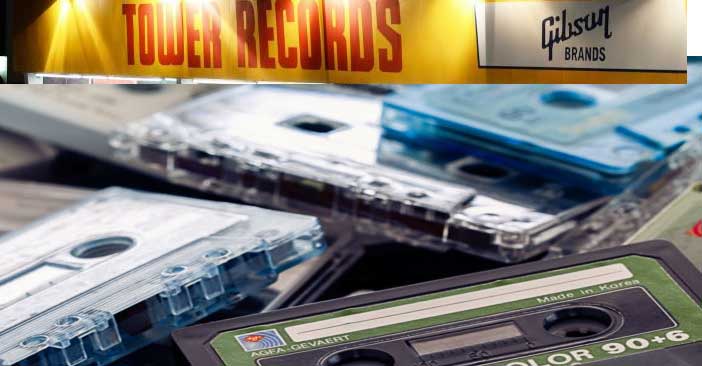
Everyone who grew up with a tape deck remembers mixtapes, or compilation tapes, as we used to call them in the UK. They remember sitting with a pile of records or CDs, assembling the perfect order, sending the right message. The narrator of Nick Hornby’s novel High Fidelity, Rob Fleming, had a set of parameters that had to be observed: “You can’t have two tracks by the same artist side by side, unless you’ve done the whole thing in pairs, and … oh, there are loads of rules.”
“My first girlfriend and I had a cassette,” remembers Britt Daniel, frontman of Spoon. “She’d put a song on it, then give it to me. I’d keep hold of it for a couple of days, then put a song on and give it back to her. They were all message songs – my communication skills were not top-notch, but it was very sweet.”
“I used to try to impress with a really wide variety of genres,” says Adrian Quesada of Black Pumas. “I knew a little bit about jazz, so I’d always put some jazz on. There was always a ballad or two. And there was always some hip-hop that I thought the girls would like – A Tribe Called Quest.
The format’s spread was also dependent on an act of both generosity and commercial pragmatism by its maker. The first “compact cassette” was developed by Lou Ottens of the Dutch electronics giant Philips and released in 1963 (it was advertised as an aid for recording speech, not music). Its great asset was not sound quality, but portability and ease of use, compared with the reel-to-reel tapes that had come before. To make sure its invention would dominate the market, Philips licensed it to other companies.
High Bias: The Distorted History of the Cassette Tape by Marc Masters is out now, published by University of North Carolina Press. Unspooled by Rob Drew is published 5 March by Duke University Press. Read the full article on The Guardian.